General Informations About the Book
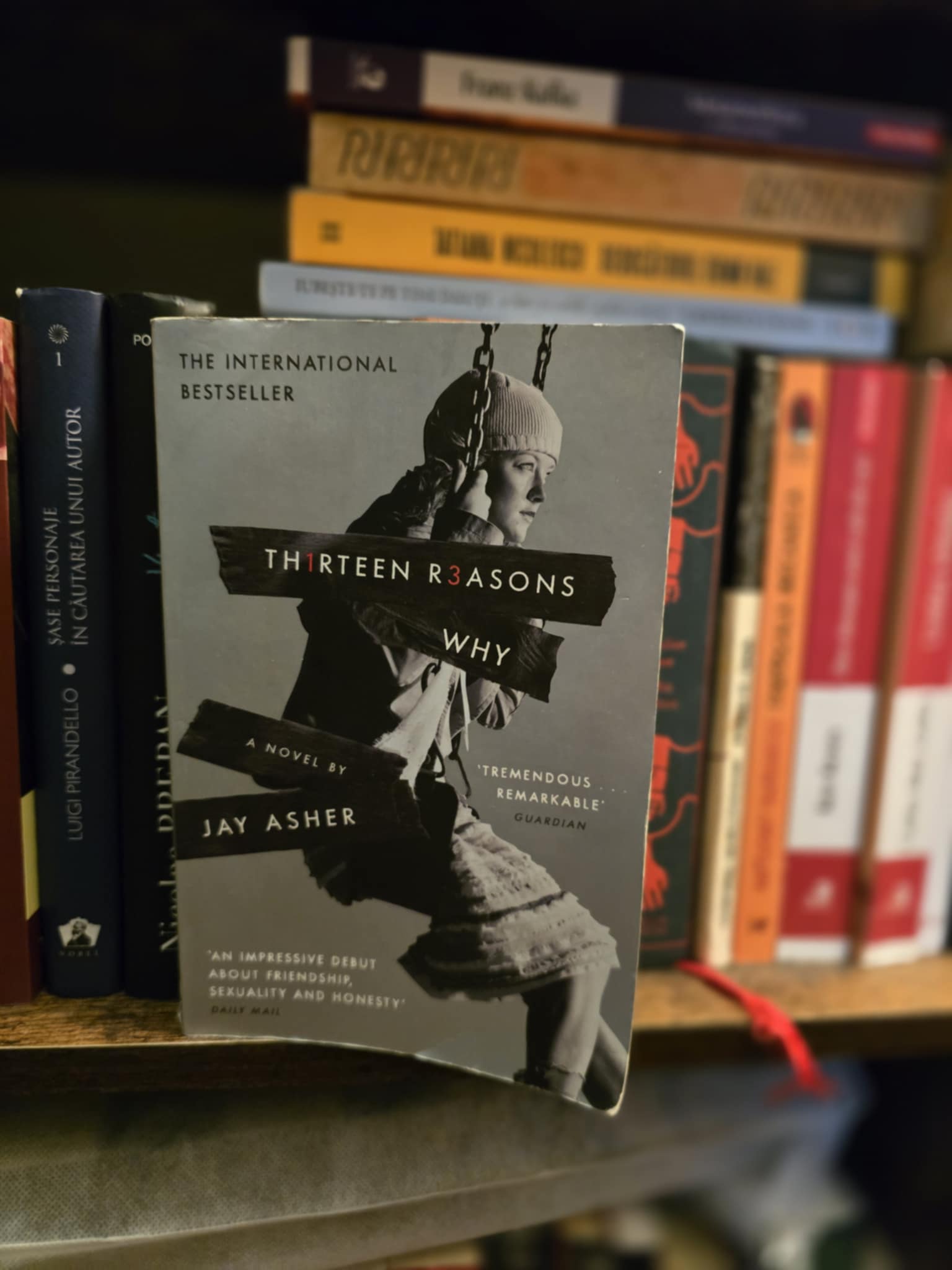
13 Reasons Why is a book written by Jay Asher published in 2007. Ten years later it was made into a four season series, although only the first season is based on the book.
If you own the Penguin Books physical format, London, 2007, at the end of the book you can find a written interview with the author who, amongst other things, is asked how the idea of this story occured.
While visiting a museum, Asher was given a Walkman with a cassette tape inside which described to him what he was looking at. Because he was drawn to unique formats in lietarture and being interested in humorous stories, he believed crafting one which involved listening to tapes would make an intriguing book. However, a humorous one would not be fitting.
A very important fact to add here is that Jay Asher had a close relative who attempted suicide and survived. Even so, his main character will not. He was captivated though by the idea that everything affects everything, as this relative of his over the years could not point to one specific circumstance that led to her decision. As you can tell by the title of the book, this idea was very inspiring.
A Brief Summary of the Book
13 Reasons Why follows a young boy, Clay, who one day receives a strange package at his door, a shoebox full of cassettes recorded by a colleague from his school, Hannah Baker, who recently commited suicide.
On the tapes, Hannah explains the thirteen reasons, each connected to a person or event, that led her to her decision. As Clay listens, he follows a map around their town to the places where the events occurred, uncovering painful truths about bullying, betrayal, rumors, sexual harassment, and the bystander effect.
At the end of the book, Clay finishes listening to all of Hannah’s tapes, including the one where she explains her final feelings of hopelessness. He is devastated, but the experience pushes him to understand how deeply people’s actions can affect someone.
After hearing everything, Clay decides to reach out to Skye, a girl he suspects might be struggling in the same way Hannah was. The final scene shows Clay calling out to her and trying to connect, suggesting that he has learned to take action instead of staying silent: “Two steps behind her, I say her name. Sky” (p 288).
The book ends on a small note of hope: Clay cannot change what happened to Hannah, but he chooses not to repeat the bystander role ever again.
A Book Analysis and Critique
Before diving concretely into every cassette and reason, I cannot help but criticize the possible hidden intentions of the book and/or author. Both the book and the show seem to try to romanticize the notion of suicide. This in itself is immoral. It should also be illegal. Suicide is a very sensitive subject, one of the most sensitive ones I would say, even in philosophy. Camus believed that the most important question is this: is life worth living? If you are interested in Albert Camus, you can read my book review on The Stranger.
He was, like many others (Phillip Mainländer, Nietzsche and Emil Cioran) inspired by Schopenhauer, but just like him he did not advocate for suicide. He believed that life is inherently meaningless and that people search for meaning, but the universe does not provide one and remains quiet, which fosters a feeling of absurd. Camus suggests that we should revolt against this absurd. Suicide is not an option. It would be giving up. The same goes with Schopenhauer. Our death will not change anything in the universe. This will cannot be diminished by our dissapereance. Instead, Schopenhauer promotes enganging with art and ascetism. Camus believes this is the starting point for living authentically.
Now, regarding the book at hand, a big issue I have with it is that what Hannah does feels counter-intuitive. Her suicide note consists of 7 tapes in which she explains every single reason that lead to her decision. This so-called “note” looks like a school project which would take a whole semester to finish, and at no point in time she changes her mind. It is true that before the last tape she says: “One… last… try. I`m giving life one more chance” (p 269). But if you read the book you see that she never had a real intention to go back, which means she had her mind already made up.
The biggest issue is not this though, but the fact that she does not try to think in the best terms. Life can be thought as a game of chess. In the past, if you played for the world title in chess, the game would be adjourned after the 40th move, and the players would analyze the game at home. It would have been in their best interest to think of the best move not only of their own but also of their adversary.
Similarly, Hannah should have thought of the best move given what she had at hand. She could have used her “project” in such a way that she would not be an outcast anymore, and she would even become a heroine and probably the most popular kid in school. Why? Because on these tapes she is exposing people: some are mean, some are good only pro forma because they feel a pathological need to be loved by everybody and one was even a rapist. Why not use this in your advantage?
There is a moment on her tape recordings when she feels like having fun with what is happening. Why was she consistent with her decision I cannot understand. At no point she changes her mind with respect to taking her own life.
The last thing I want to mention in this section is another book, quite famous, written by Goethe, titled The Sorrows of Young Werther. It was very controversial at the time. After its publishing there was a wave of suicides. But nowhere in the language used in it justifies suicide or threates it as a joke or game.
Hannah, on the other hand, threats the act of giving up on her life as a game: “Hello, boys and girls. Hannah Baker here. Live and in stereo” (p 7). “Why would a dead girl lie. Because she can`t stand up” (p 8). “I am not actually sure how this whole dead thing works” (p 12). “Welcome back. And thanks for hanging out for part two” (p 36).
The Character of Hannah Baker
Hannah Baker is a sensitive, perceptive, and creative girl who wants genuine connection but feels increasingly isolated by the cruelty, rumors, and misunderstandings around her. She is intelligent and observant, but her vulnerability makes her deeply affected by betrayal and the lack of support from those she trusted. Throughout the story, Hannah’s voice reveals both her pain and her desire to be heard, showing a complex mix of resilience, hurt, honesty, and longing for compassion.
A problem of her behaviour is that in both the book and series she seems a socially young girl, but her decisions look like the result of someone who is deeply introverted and socially awkward. While her pain is understandable, some of her choices may be seen as self-destructive and indirect in communication. Instead of seeking help from trusted adults or friends, she records tapes, which puts others in a reactive and guilty position rather than fostering understanding or support.
While many people hurt her, the way she documents “reasons” can seem like she is holding individuals solely responsible for her decision, which some critics argue oversimplifies complex social interactions.
She internalizes a lot of suffering instead of asking for guidance or using available resources, which contributes to her isolation.
At the core of the book is the real impact of bullying, but the way Jay Asher is handling this notion goes hand in hand with him justifying suicide.
13 Reasons Why
1. Justin Foley ruined Hannah’s first kiss memory and started her negative reputation by bragging about their encounter at the park.
2. Alex Standall created a “Who’s Hot / Who’s Not” list and assigned Hannah the category “Best Ass,” which gave others an excuse to treat her as an object.
3. Jessica Davis physically assaulted Hannah at Monet’s Garden Café, believing false rumors, and left Hannah with a scar above her eyebrow.
4. Tyler Down acted as a “Peeping Tom” by secretly taking pictures through Hannah’s bedroom window, destroying her sense of privacy and security at home.
5. Courtney Crimsen used Hannah to boost her own flawless image by inviting her to a party and then spreading fictional, damaging rumors about her dresser drawers.
6. Marcus Cooley stood Hannah up for a Valentine’s date at Rosie’s Diner and then attempted to sexually assault her in a booth after showing up late.
7. Zach Dempsey stole Hannah’s notes of encouragement from the Peer Communications class suggestion bag, choosing to take away the hope she desperately needed.
8. Ryan Shaver stole Hannah’s personal poem from her notebook and published it in the Lost-N-Found Gazette, exposing her deepest, most vulnerable thoughts to classroom ridicule.
9. Clay Jensen did not contribute to the malicious chain but failed to stay and help Hannah when she was crying and pushed him away during their intimate conversation at the party.
10. Justin Foley (again) is primarily responsible for the events detailed on Cassette 5, Side B, who is blamed for letting Bryce Walker sexually assault Jessica Davis when Justin took up post outside the bedroom door and then allowed Bryce entry for “a few minutes” (p 225) while Hannah was hiding and unable to intervene.
11. Jenny Kurtz caused a fatal car accident by driving away after knocking down a Stop sign, ignoring Hannah’s pleas to call the police and leaving the incident unresolved.
12. Bryce Walker sexually assaults Hannah in a hot tub at Courtney’s after-party, taking advantage of her when she had given up fighting and allowing her negative reputation to become her reality.
13. Mr. Porter, the guidance counselor, was the last person Hannah asked for help but advised her to move on rather than supporting her decision to report her assault, leading her to conclude that no one would stop her from ending her life.
Concluding Thoughts and Final Remarks
If anyone remembers Lost and Delirious from 2001, starring Piper Perabo in her best role of her life, you might remember her character being developed in such a way that you would understand why the story ends so sadly. She mentions in the beginning, in opposition to the girl she loved, that she had everything to lose. Although it is not reasonable even in this context to find rationalization of the suicidal act, you would still understand her act.
The reason I am mentioning this is because I think Hannah had something to lose, but she did not care that much. However, I do not blame her as a character, rather the author who wrote her like that. The big problem here is that at the end of the day (or book) Jay Asher is saying that yes, what Hannah did is justifiable. It is not. And it should not be! The only situation where I can give it a pass is euthanasia. And I say this because I had a friend who was in incredible physical pain and died by euthanasia.
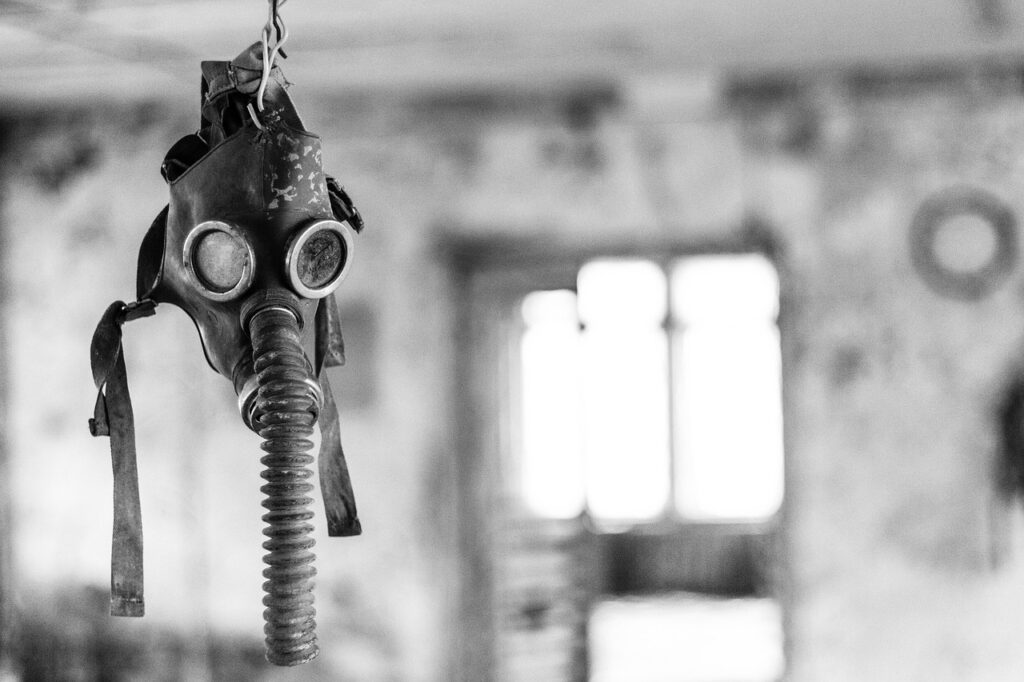
Actually, another situation where it would be justifiable is one (or some) sacrifying themselves for the good of the rest. Think of the miners in Chernobyl. We are dealing here with utilitarianism.
So, when Hannah says “me… giving up… on me” (p 253) is ungrounded.
The other issue is her being constant in her decision: “the only difference being that I`ll know it is the last day” (p 256).
What I found positive about the book is that the two main characters feel real. The voice of Hannah is as raw as it gets. I like that. I also appreciate the strategy of the author not to use a lot of descriptions in world building. The idea is that by doing so you push the mind of the reader to fill in the blanks. You boost their creativity. Lord of the Flies by William Golding is at the other end of the spectrum, being rich in epithets, metaphors and descriptions, but either of the strategies work as well. They have the same impact on the reader.
Would I recommend the book? Yes and no. Yes, because at the end of the day it is a work of fiction. And the ending is actually a beam of hope, it shows that Clay learned how to pay more attention to others and get involved. This is probably the message of the author as well. No, because it tries to portray suicide as either cool or a way of dealing (in a final way) with things. For Emil Cioran, writting was an alternative for suicide. Hannah could have used her passion for poetry for the same reason. But she did not.
What did you think of the story? If anything, leave a comment.