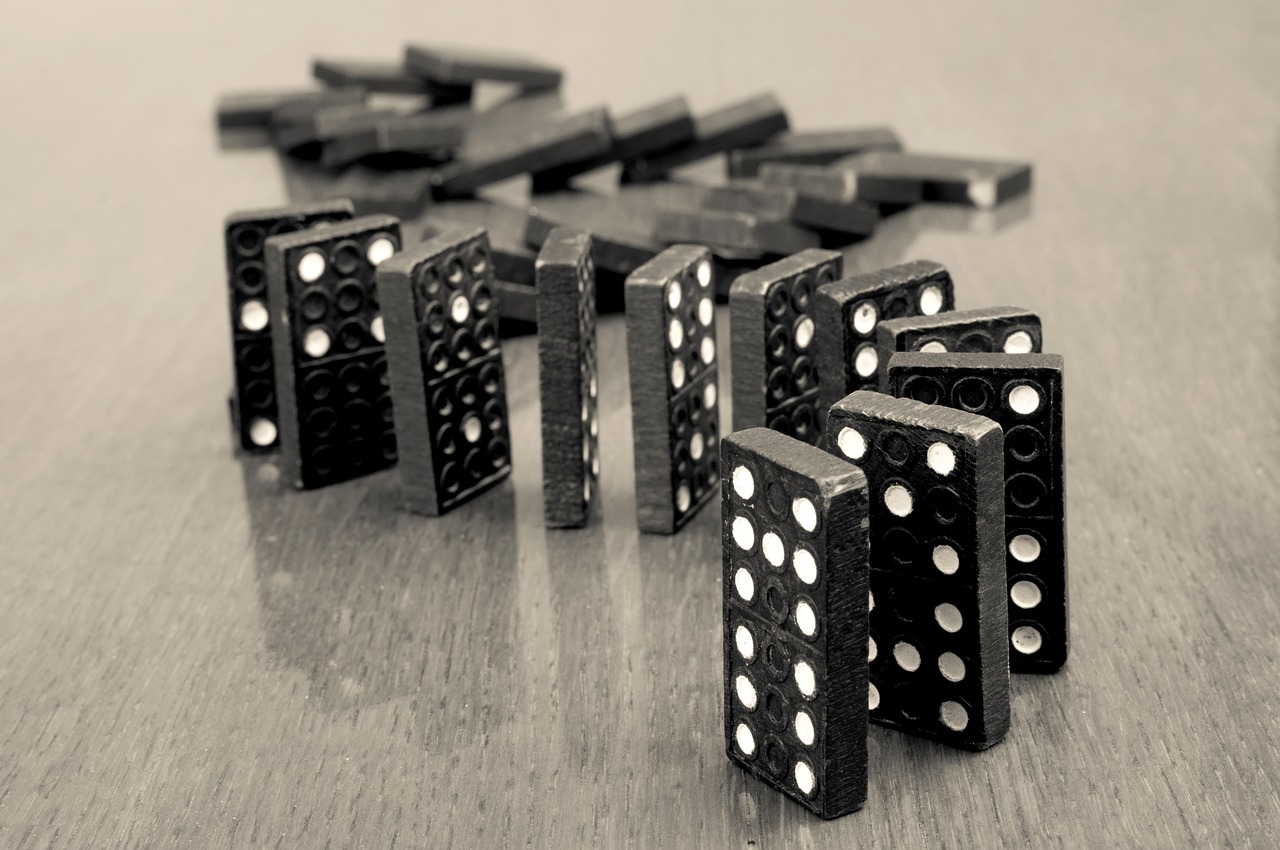
What is causality?
Causality is the notion describing that every effect arises from a cause, which is another way of saying that nothing, or most likely nothing, happens randomly, but is the result of prior conditions. In science and philosophy this is a fundamental concept, because it provides the framework through which we understand chance, behaviour and the unfolding of events in the world.
Causality in Science
In science, causality is important because the primary aim of scientific inquiry is to explain and to also predict phenomena. To give an example, a comet is currently passing through our solar system and approaching the sun, but NASA, having the means and scientific tools at hand, confirms that it poses no danger to Earth. Moreover, scientists know with approximation the date when the comet will reach its closest point to the sun, which is around 30th of October this year. Without causal reasoning, science would be limited to describing patterns rather than explaining them.
Causality also allows scientists to distinguish between genuine relationships and mere correlations; if two things happen at the same time, like ice cream sales and drowning deaths increasing in summer, a scientist would use causal reasoning to identify the underlying cause, such as hot weather, rather than assuming one causes the other.
Causality in Philosophy
In philosophy, the notion of causality is approached in a more abstract and theoretical way. Philosophers have long debated what it means for one thing to cause another, how we come to know causal relationships, and whether the universe operates according to deterministic laws. Causality is important because it boosts our ability to make sense of the world, whether by understanding natural laws, making ethical judgments, or simply navigating daily life. Without it, both science and philosophy would lose their explanatory power.
The question of causality directly intersects with the debate about free will: if all actions are caused by prior events, then this raises the issue of whether we are free agents or not, but also moral agents responsible for our own actions. Philosophers like Spinoza argued for a fully determined universe, while others have tried to reconcile causality with moral responsibility and choice.
Free Will AND Moral Responsibility?!
In this article I am trying to answer a question, using what I have learned so far about causality, mostly relying on occasionalism, Hume’s notion of causality, Spinoza and, in addition, Robert Sapolsky, who thinks Spinoza is one of the earliest philosophers to articulate a clear, naturalistic determinism centuries before neuroscience existed. Sapolsky also calls himself a determinist in his recent book, Determined: A Science of Life Without Free Will: “There’s no free will and thus holding people morally responsible for their actions is wrong. Where I sit”.
The question I am addressing is: how do philosophical and scientific understandings of causality challenge traditional views of free will and moral responsibility? By navigating in the vast ocean of philosophy, like a captain chasing lost treasures in the deep, I want to find a reasonable answer to this question. And although I have learned that it is not in the spirit of philosophy to try establishing today (or any other day), once and for all a certain thing, I will do my best for the purpose of this article. But then again, if philosophy does not require that type of attitude, we can only ask ourselves what it is good for.
Causality within the boundaries of the history of philosophy
Philosophical and scientific understandings of causality have presented profound challenges to traditional views of free will and moral responsibility by questioning the nature of agency, the predictability of natural laws, and the very possibility of human choice. These challenges emerge from diverse perspectives, including theological occasionalism, empirical scepticism, and philosophical determinism.
Causality in Antiquity
While Aristotle was not the first to consider causes, he is the first to develop a comprehensive and influential theory of causality: “Human beings began to do philosophy (…) because of wonder” (Shields, p 36).
Aristotle believed that humans naturally wonder and seek to understand the universe, and this drive leads them to pursue objective explanations grounded in a comprehensive understanding in four types of causes: material, referring to “that from which an entity comes to be”; formal, “the shape or structure of an entity”; efficient, or “the agent imposing the shape or structure” and final, which is “that for the sake of which” (Shields, p 44).
We can choose a quick example to see how these four causes apply in real life. Let us consider a wooden table: the wood itself represents the material cause, the design of the table is the formal cause, the efficient one is the carpenter, and the final regards the purpose, such as to eat at or work on.
Aristotle posits that causes are real and objective, existing independently of human interaction, and that identifying them is essential for providing complete and adequate explanations. He maintains two main claims regarding these four causes: first, a complete and adequate explanation for a phenomenon typically requires the citation of all four causes, and second, beyond these four causes there are no other kinds. However, an opposing view regarding the causes, or better yet, the cause of all things, is held by the notion of occasionalism.
Causality in Middle Ages
Ocassionalism is that view on causation postulating that there is only one efficient cause, which is God. This view is rather radical, since the problem of one`s responsibilityfor their own actions can easily be blamed on God alone.
The Ash`arite School
The Ash’arite school of Islamic theology, particularly through figures like al-Ash’ari and al-Ghazali, developed a radical cosmological theory known as occasionalism, which challenged conventional notions of causality, and by extension, human agency and responsibility. Did these occasionalists not believe in human responsibility, then? Did they not in fact uphold that God will punish or reward humans on the Last Day? So, if agency (humans causality) cannot be the criterion for them to uphold human responsibility, what other criterion did they then invoke?
Ash’arites insisted on preserving God’s complete control over His creation (Griffel, p 125), arguing that God is the only cause for all events in the universe. They posited that every occurrence is the product of God’s direct and miraculous intervention, meaning that “created entities, whether animate or inanimate, are incapable of any initiative since they are devoid of any active powers of any kind” (Fakhry, p 17). For example, when cotton burns in contact with fire, it is God who enacts the burning, not the fire itself, “which is inanimate, and it has no action” (al-Ghazali, p 167).
Al-Ash’ari denied that things are compelled to act according to their inherent natures, arguing that such potentialities would limit God’s action and freedom. Regularities observed in nature, like satiety following eating or burning following contact with fire, are merely God’s habits in the temporal order, not necessary connections (al-Ghazali, p 166), and God can break these habits at will, as demonstrated by miracles.
The Mu’tazilites
This occasionalist view implies that humans do not create their own actions or generate subsequent effects autonomously, directly contradicting views held by Mu’tazilites who believed in human free choice: “the Mu’tazilites taught that human voluntary actions are neither created by God nor known to Him before they happen; rather, they are the autonomous creation (khalq) of the human agents” (Griffel, p 127). If created beings have no influence or power, and God spontaneously creates everything, then the traditional understanding of a human agent freely willing and causing an action seems to dissolve.
Al-Ghazali explicitly states that the connection between habitually believed causes and effects is not necessary. He argues that it is within divine power to create satiety without eating, death without decapitation, or continue life after decapitation (al-Ghazali, p 166). From a philosophical standpoint, this leads to contradictions, where events like a book changing into a horse or a boy into a dog could be possible if effects do not necessarily follow causes.
Al-Ghazali responds by stating that God creates in us the knowledge that He will not enact these absurd possibilities, but that they remain possibilities for God to perform as miracles (al-Ghazali, p 171). This suggests that what appears to be a consistent world is due to God’s habit of consistent creation, rather than inherent causal powers of created things.
While al-Ash’ari denied human power, the Ash’arite system still aimed to reconcile this with human responsibility for blame and reward.
Criticism on Ocassionalistic View
In Islamic theology, comprehensive cosmological theories developed in the context of an early theological debate on the nature of human actions. If God has power over all things, how can we explain that humans are also under the impression that they have power over their own actions? Do humans have the power (qudra) to carry out their own actions, or is God the force actualizing this power? And if God solely possesses this power, why does the human earn God’s blame for bad actions and His reward for good ones? (Griffel, p 124)
Averroes, a critic, noted that this occasionalist view reduces the created order to total impotence and that it is difficult to understand how reason or knowledge could function if every event were a direct, arbitrary act of God. He saw the repudiation of causality as a repudiation of knowledge itself, making science impossible. For Averroes, “existing things possess certain natures and properties, which determine the kinds of actions associated with them” (Fakhry, p 26), and denying these natures would make everything reducible to one thing or nothing.
Causality in Modern Times
In stark contrast with occasionalist theology, David Hume offers a compatibilist approach to causality and moral responsibility. His concept of causality shapes his approach to moral responsibility by re-evaluating the nature of cause-and-effect relationship and extending this understanding to human actions and the mind itself. This leads to a naturalistic theory of responsibility that is integrated with a mixed or teleological retributivist theory of punishment (Paul Russell, p 545).
First, we need to analyse Hume’s understanding of causality and its application to the mind and then see how it deals with the ethics of responsibility.
David Hume
Hume was one of those big and important philosophers writting in English language, who was considered a skeptic and an atheist. He was very influential in science, regarding causation and induction, and he was particularily very influential on Kant`s philosophy, who famously said that Hume woke him from his “dogmatic slumbers”.
Hume and Causality
Hume argues that “all reasonings considering matters of fact are based on the relation of cause and effect” (Hume, p 4), including human actions. When observing cause and effect, such as one billiard ball striking another, Hume identifies three observable circumstances: contiguity in time and place, priority in time of the cause, and constant conjunction between the cause and effect. He emphasizes that beyond these observable facts he can discover nothing more.
Crucially, Hume rejects the traditional notion of necessary connection, power, force or energy inherent in the cause that compels the effect. He contends that if such an idea existed, it would have to derive from an impression, but no such impression is found.
Instead, for Hume, the idea of force or energy simply means the “determination of our thought, acquired by habit, to pass from the cause to its usual effect” (Hume, p 8). There is no proof for any connection of cause and effect because the mind can always conceive of any effect following any cause without contradiction, meaning the contrary is always possible. Therefore, our inferences about cause and effect are not based on reason but on custom alone, which acts as the guide of life. When we believe an effect will follow a cause, it is not due to a new idea but a different manner of conceiving an object, a feeling that is stronger or more intense.
Hume`s Take in a Nutshell
So, for the sake of simplicity, I will resume Hume’s view. The Scottish philosopher says that we cannot, through logic alone, deduce that one event will cause another. Instead, we learn through repeated experiences that certain events are constantly conjoined, like the example of the billiard ball mentioned above. From this repetition, we form expectations, not logical certainties.
Hume insists that belief is not the result of rational deduction but rather a feeling, a vivid manner of conceiving an idea based on habit. We expect the future to resemble the past not because we can prove it will, but because custom compels us to. He challenges the notion of necessary connection, claiming we have no impression of force, power or necessity beyond the habitual association of events. He concludes that belief, causality, and even the continuity of the external world are not rationally justified but are natural propensities of the human mind.
Hume and Moral Responsibility
Hume’s understanding of causality and the mind leads to a naturalistic theory of responsibility. Paul Russell notes that Hume seeks to understand responsibility by empirically investigating the principles of human nature and the role of feeling in human life. Responsibility, for Hume, is understood in terms of our “natural psychological reactions to the moral qualities and character traits of our fellow human beings”, which generate “emotional responses and reactions in us (i.e. moral sentiments)” (Russell, p 548). These sentiments are rooted in our constitution and temper and are, as he says, “a given of our human nature” (Russell, p 548).
Hume’s framework suggests a compatibilist view of free will. An agent is regarded as responsible when they act according to the determination of their will, exercising liberty of spontaneity. In these circumstances, our moral sentiments are naturally aroused, allowing us to infer the agent’s character from their action. Conversely, if an action is due to external force, violence (lacking liberty of spontaneity), or is uncaused (indifference), it is impossible to infer character, and thus no moral sentiment is aroused, and the agent is not regarded as responsible. This means that determined actions can still be a basis for moral sentiment and responsibility, provided they originate from the agent’s character and will.
Theory of Punishment
Hume’s concept of moral responsibility serves as the foundation for his theory of punishment, which Russell characterizes as “Hume’s teleological retributivism” (Russell, p 545). This theory distinguishes between two aspects of punishment:
First, “the justifying aim of punishment” (Russell, p 545), and second, the distribution of punishment, “that is, who may be punished (i.e. who is liable to punishment) and how severely may we punish them (i.e. what amount of punishment are they liable to)?” (Russell, p 545).
The first aspect is forward-looking and based on social utility. Punishment is justified because it encourages individuals to follow the rules of justice that are vital for maintaining peace and security in human society. Hume contends that punishment lacking a legitimate aim or purpose contradicts our fundamental concepts of goodness and justice. Therefore, punishment is only justified if it serves the public interest. This means that Hume rejects pure retributivism, which would justify punishment simply based on guilt or wrongdoing without reference to consequences.
The second aspect is backward-looking and is interpreted in terms of our moral sentiments. Our moral sentiments help determine who deserves punishment and to what extent, meaning punishment must be proportionate and never inflicted on the innocent.
Concluding Hume
While this supports negative retributivism, limiting punishment to what is morally justified, it rejects positive retributivism, because punishment must also serve a social purpose beyond mere desert.
To conclude, Hume argues that while our moral sentiments are natural and involuntary, the act of punishing is a deliberate choice that must be justified by its social utility, not merely by retributive impulse. His naturalistic view of moral responsibility links backward-looking sentiments with forward-looking justification, allowing for a humane and socially grounded theory of punishment in a determined world. Aside from how Paul Russell calls his theory, this makes Hume a compatibilist, which means that he believed determinism is compatible with free will and moral responsibility.
But let us now move forward towards Spinoza. Baruch Spinoza was famously known (or infamously if you will) for having a radical view on the notion of God.
Baruch Spinoza
One of my favourites philosophers, alongside Kant and Nietzsche, Spinoza was, in the words of Bertrand Russell, “the noblest and most lovable of the great philosophers.” He was part of the rationalists thinkers who opposed the empiricists, and they held that fundamental truths can be known independently of sensory experience.
God as Causa Sui
In the time he lived, it was dangerous to believe of God other than in the traditional way, but he himself did not always hold that position, writing that God is an uncaused cause, but changed it later in Ethics concluding that logic constrains him from seeing God as transcendent. For Spinoza, God is inscribed in the universe, not outside it, which means that he must be self-caused, or causa sui, as he says. The traditional God is transcendent, which means He is separated from his creation, or Nature. In this image we would have two substances. However, Spinoza is a monist.
But let us ask: what does it mean for this substance to be causa sui? That means Spinoza’s God has a double eternity: one pertains to His existence, and the other to the actualization of that existence, through the eternal activity of causing His own existence. In order to cause Himself, He must exist prior to His own existence, which would require that He has already caused His existence – and so on, into infinity. This notion of God fundamentally points to determinism through his understanding of God as the sole, absolutely infinite substance from which all things necessarily flow.
God as Nature
As already mentioned, for Spinoza, God is synonymous with Nature itself (Deus sive Natura), defined as an absolutely infinite being, “a substance consisting of infinite attributes, each of which expresses eternal and infinite essence” (Scruton, p 45).
A direct consequence of God being the sole, self-caused, and eternally existing substance is that “everything that happens in the world happens by necessity” (Scruton, p 51). Since the nature of God is eternal and necessary, and all things flow from it, there is no more freedom in the physical or mental realms. This takes us further to the idea of human action. For Spinoza, human actions are modes of God.
In order for us to better understand this, I will quickly explain what modes are, relating them to substance and attributes. In the ontology of Spinoza, we encounter these three fundamental components or categories. Substance is that which exists in and of itself and is conceived through itself (God). Attributes are what the intellect perceives as constituting the essence of substance; we know, in our limitation, only two of these: thought and extension, but Spinoza holds that there are infinitely many. A mode “is something which cannot exist independently but only in some other thing, upon which it depends” (Scruton, p 42).
In essence, all things are modes expressing the infinite nature of the one substance through its attributes. Individual things, including you, the reader, and I, the writer of this article, are considered modes of the divine substance. Therefore, “every human action, as a mode of God, arises out of the same unbreakable chain of necessity, and therefore ideas such as chance and freedom cannot be given the significance that they have in the imaginations of the vulgar” (Scruton, p 52).
Freedom in Spinoza`s Determinism
Then, are we not free? Not free at all? Free, is in Spinoza thought, that thing whose act comes from the necessity of its own nature. “Hence, the only truly free cause is God because he both exists and acts from the necessity of his own nature and cannot be affected by any external cause” (Gatens, p 395). That lives us where in this picture?
Moira Gatens, in writing about Spinoza’s notion of freedom, states that “human freedom is always a matter of degree” (Gatens, p 395), and we are free to the extent that we act from reason. She quotes Spinoza: “I call him free who is led by reason alone” (E4p68d). Humans cannot escape the consequences of being acted by something else. So, she says, we live on a certain axis, or spectrum, active at one end, and passive at another, “where no one is entirely passive, nor entirely active” (Gatens, p 395). But the more active and rational one is, the more free he becomes.
Thus, it seems that Spinoza grounds free will in understanding. The more a person acts from reason (rather than passive emotions), the more they express their true nature and the essence of God. Moral responsibility, then, is less about deserving praise or blame, and more about degrees of understanding and self-determination. To act rationally is to be more free, even though this freedom still operates within a fully deterministic framework.
Robert Sapolsky on living without free will
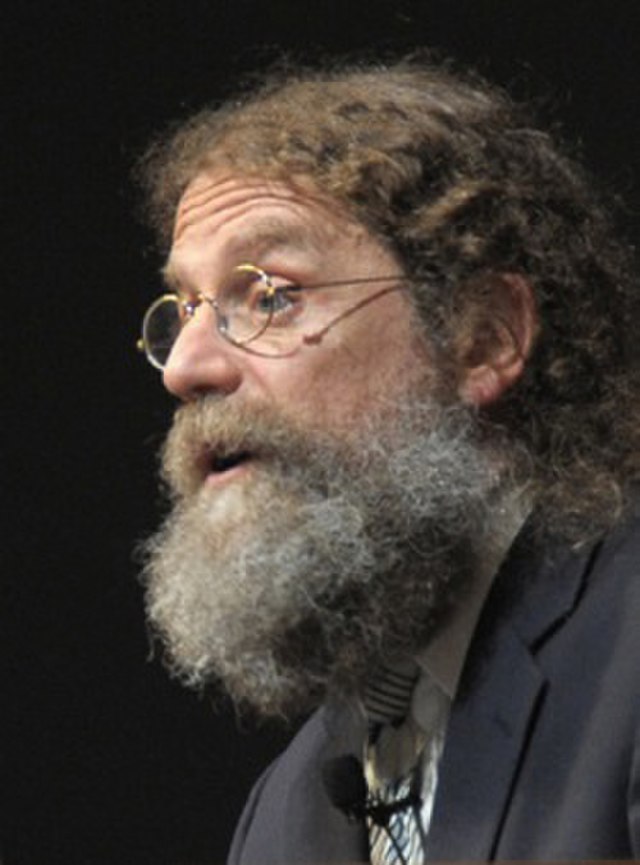
We are now at the last section of this article. We can say that it was necessary to go through the thinkers mentioned prior and their perspective on causality in order to arrive here. But I did that freely. Didn’t I? Otherwise, I would have chosen Bertrand Russell as my last thinker, or anyone else. But my understanding of this notion of causality made me actively choose Sapolsky. He is an American university teacher, a neuroscientist and primatologist.
Determined: A Science of Life Without Free Will
In Determined, he makes a comprehensive argument against the existence of free will, suggesting that all human behaviour is entirely the result of biology, environment, history and chance. It is an interesting book, as I read so far, but one that sparked a lot of debate, especially around the ethical and philosophical implications of denying free will.
First Remarks
His first chapter is foundational, and it establishes the book’s central argument: “there is no free will, or at least that there is much less free will than generally assumed”. The author posits that “we are nothing more or less than the cumulative biological and environmental luck, over which we had no control, that has brought us to any moment.” This is illustrated by the “turtles all the way down” anecdote, where everything is caused by something prior, leaving no room for an uncaused free will.
Sapolsky goes on to critiquing the limited view that free will exists wherever you are not looking, comparing it to trying to understand a movie by only watching its final three minutes. It focuses heavily on Libet-style experiments, which provocatively demonstrated that conscious intention to act often appears after the brain has already initiated the action. Studies by Libet, Haynes, and Fried are highlighted, showing that neural activity, particularly in areas like the prefrontal cortex, can predict a decision up to ten seconds before an individual feels they have consciously chosen.
The conclusion drawn from this Libetian literature is that our sense of conscious agency can be illusory, suggesting that “free will is a myth.” Sapolsky dismisses criticisms about these experiments as being too simplistic, pointing out that what is crucial here is how any intent ultimately came to be through prior factors.
Further Remarks
On a later chapter, he speaks about the diverse, uncontrollable factors that shape human intent and behaviour. He argues that understanding where intent comes from requires looking beyond immediate moments to a person’s entire biological history. Key influences include: immediate biological states, like hormone levels, blood sugar, and their rapid impact on frontal cortex function; longer-term experiences, like neuroplastic changes from years of stress or depression affecting brain structures like the prefrontal cortex; developmental history, which is the profound impact of adolescence and childhood, including parenting, socioeconomic status, and early adversity, on the developing frontal cortex; and deep history, more precisely fetal environment, genetic variants, gene regulation, and ancestral cultural legacies (e.g., farming practices).
Thus, all we are is the history of our biology and of its interaction with environments, over which we also had no control, creating who we are in any moment without the possibility for free will to lodge in. Free will requires that our choices not be determined by past influences beyond our control, because those influences are what shaped who we are. Or as Sapolsky puts it: “this is how you became you.”
Moral Responsibility – an illusion?
So, what is the point that Sapolsky makes that we can anticipate from a distance? He argues that if free will is an illusion, then moral responsibility is also an illusion. In his view, no one deserves punishment or praise because they never chose to be who they are or do what they did. A person who commits a crime did so because of a chain of causes, like genes, neurobiology, childhood experiences, societal factors, all of which were outside of their control. He is strongly opposed to the notion of blame. If anyone is to be punished, “do so as straightforwardly and nonjudgmentally as keeping a car with faulty brakes off the road.”
Therefore, we can think that Sapolsky calls for a shift away from retributive justice (punishing people because they deserve it) toward consequentialist approaches, which focus on protecting society, rehabilitation when possible, and prevention of future harm. We should treat criminals more like people with medical or psychological conditions rather than as evil moral agents.
Conclusion
So, I have explored how both philosophy and science challenge the traditional belief in free will and moral responsibility by focusing on the role of causality.
From the early theory of Aristotle to the radical occasionalism of al-Ghazali, it is clear that the idea of free, independent action has long been questioned.
Hume approached this issue by showing that our belief in cause and effect comes from habit, not reason, and that responsibility stems from emotional reactions to someone’s character, not from any ultimate freedom of choice.
Spinoza took this even further, arguing that everything in the universe, including human behaviour, flows necessarily from a single divine substance. In his view, freedom means acting from reason, not being uncaused.
Sapolsky brings the conversation into the modern scientific world, arguing that biology, environment, personal history and even the history before our birth shape all of our decisions, leaving no room for free will as we usually understand it. If that is the case, then blame and praise lose their meaning. Instead of punishing people because they “deserve it”, we might need to think in terms of prevention, rehabilitation, and understanding. This calls for a shift in how we see justice, and what it means to be human in a world either determined or undetermined.
Final Thoughts and Remarks
For the end I leave you with some fundamental questions: What precisely is the connection between causality and moral responsibility? Is the one needed to uphold the other (as Sapolsky would argue, who rejects “blaming” people)? Or can we rethink moral responsibility as tied to different considerations than causality in the sense of free will? And in any case, is it so clear what “free will” actually is?
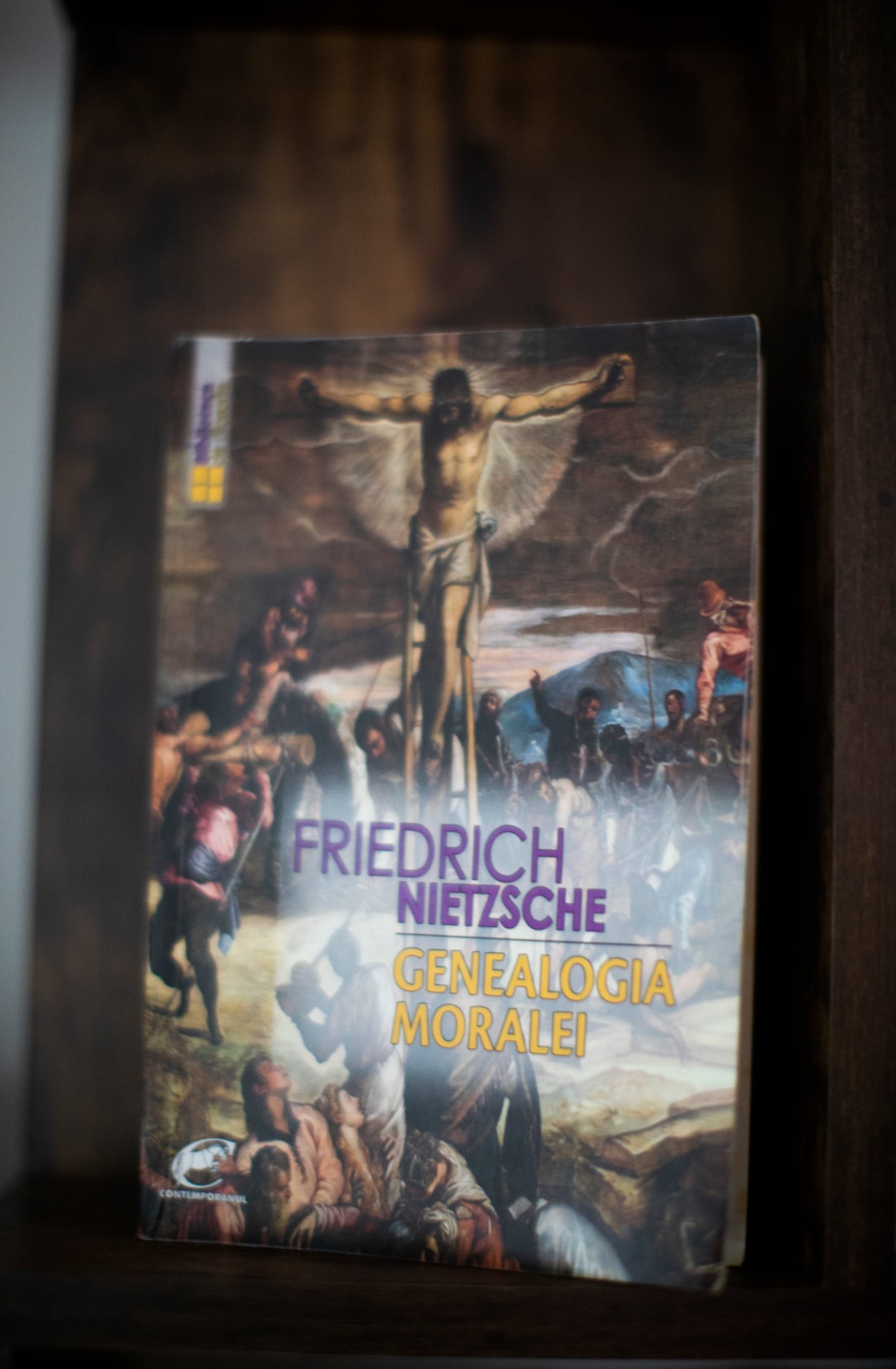
If you are interested in what Nietzsche has to say about free will, I recommend you check Twilight of the Idols, where he mentions about it in the “Four Great Errors chapter”, although that is only one example of Nietzsche rejecting free will through theology. Another view of his is actually closer to Sapolsky, where he considers a human not a singularity but a plurality of factors that come together, and his emphasis throughout his philosophy is also on unconscious drives. This would make humans trees in the wind. The wind is blowing, but to which extent are you in control of it?
1 thought on “Moral responsibility without free will”