
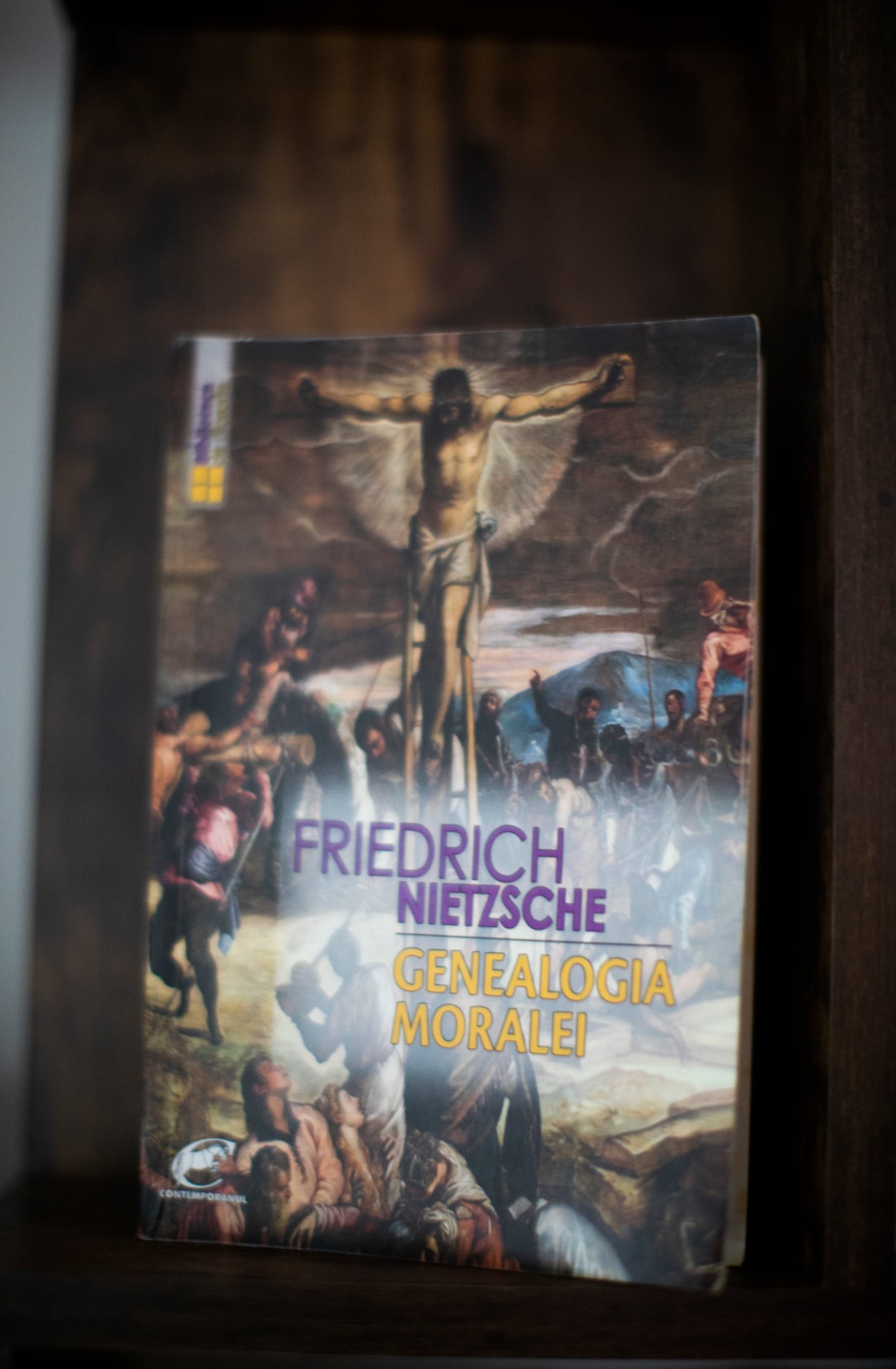
In this article I rely on the book you see in the picture and on some of David B. Allison’s notes in Reading the New Nietzsche.
The Writting of the Book
Nietzsche`s first book was begun in the autumn of 1869 and finished in 1871, when its author was 27 years old and working as a professor of classical philology. Work on the text started as preparatory studies, some of which were meant to be presented in lectures at the University of Basel. Four of them are worth mentioning, both because they anticipate the final subject of the work and because they indicate the breadth of Nietzsche’s interests at that time: The Drama of Greek Music, Socrates and Tragedy, The Dionysian Vision, and The Birth of Tragic Thought. The final title was chosen around October 1871, and the book was published in January of the following year.
In the later preface of 1886, Nietzsche reproaches himself for having shamelessly fallen under Wagner’s influence. His association with Wagner had cooled by then, and for him it had become nothing but a source of shame.
After publication, Nietzsche was ridiculed by his academic colleagues, who considered the book unprofessional and outside the conventional boundaries of philological research. One of them even believed that the reception of the book would spell the end of Nietzsche’s professional career. All this deeply saddened the young philosopher.
The book explores the interaction between the Apollonian and Dionysian artistic impulses, revealing how they shaped Greek culture and, ultimately, how the rise of Socratic thought contributed to the decline of tragedy. Nietzsche saw Greek culture as opposed to Christianity: the former affirms life, the latter denies it.
Two Ancient Greek Gods
The Birth of Tragedy attempts to portray two distinct psychological dispositions or attitudes that helped define classical Greek culture. They were traditionally symbolized by two deities: Apollo and Dionysus.
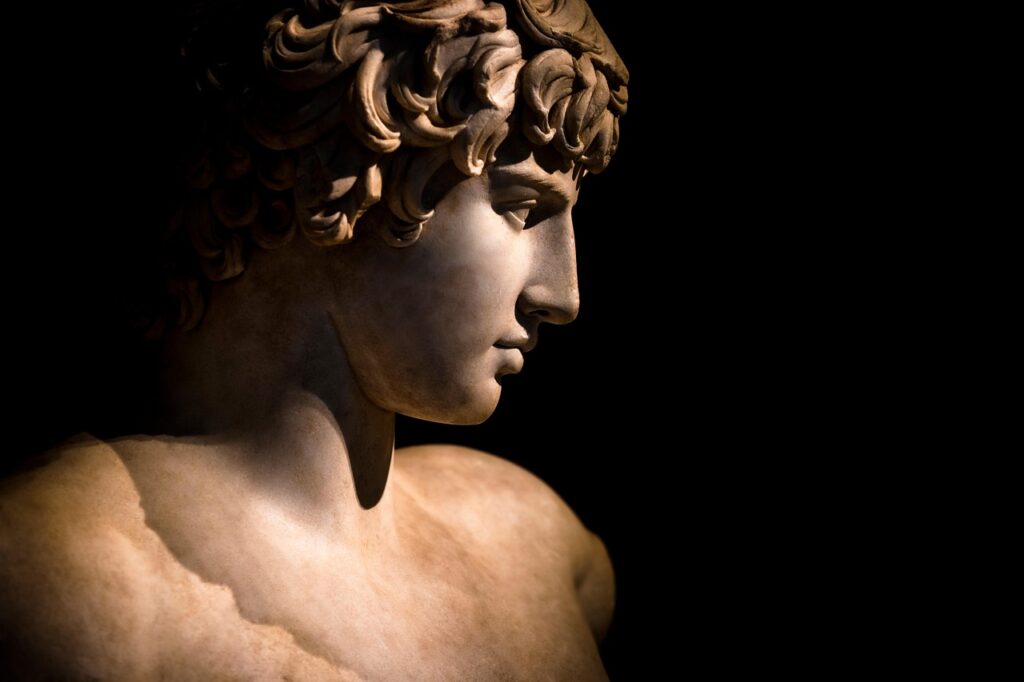
Apollo represents order, measure, form, clarity, individuality, and the force of creation as uniqueness and singularity. He was associated with epic poetry, especially Homer, but also with the visual arts: sculpture, painting, architecture. Implicit in Apollonian art is the concept of restraint, balance, and limitation — qualities that demand human reflection. In contrast, Dionysus represents the instinctual element of human expression, more precisely the violent outbursts of intense emotions, sensuality, intoxication, frenzy, and madness. He was associated with lyric and dithyrambic poetry, with music and drama, often performed in public spectacles in which audiences actively participated.
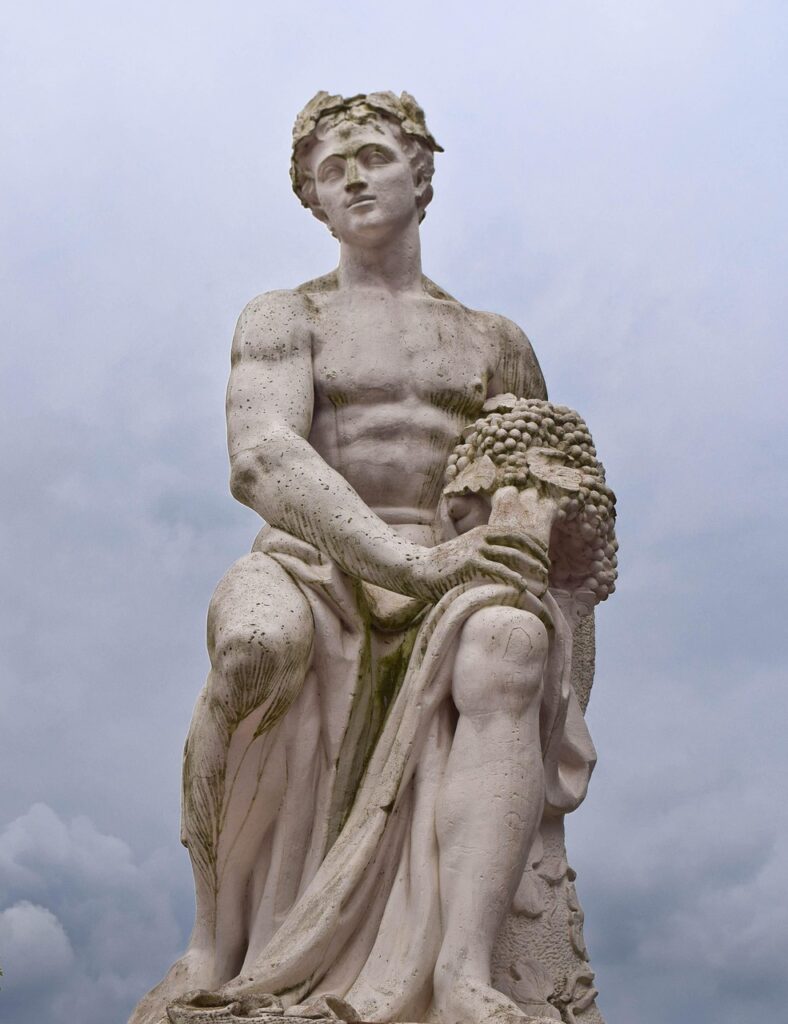
Unlike Apollo, Dionysus was believed to inspire collective eruptions of ecstatic celebration, where the individual lost himself in a greater whole through song, music, recitations, and hymns. These festivals, in their ritual form, were accompanied by the consumption of large quantities of wine (Dionysus was also the god of wine), sometimes narcotics and hallucinogens, and often led to orgiastic manifestations of mystical and sexual frenzy.
Allegorical Figures
Both the Apollonian and the Dionysian attitudes were specific responses to the question of life’s value. For Nietzsche, the beauty and greatness of classical Greek art was the result of the fusion between the two. The tragic spirit consecrates both human passions and intellect.
Nietzsche and Judeo-Christian morality
My overall project is to seek in Nietzsche’s writings tracing his battle with the Christian monster. How does his relationship with Judeo-Christian morality appear and develop in his philosophical work?
Unlike the Dionysian attitude (which spiritualized passions), the ascetic or anti-sensual practice of Christian moral doctrine sought only to extirpate passions — what Nietzsche saw as a form of castration, a virulent attack on the roots of life. The church’s practice was hostile to life. In section 5 of the preface, Nietzsche writes:
“Behind such a mode of thought and evaluation, so obviously hostile to art (…) I have always sensed also hostility to life itself, a furious, vindictive aversion to life itself (…) Christianity has been, from the very beginning, essentially and fundamentally a disgust and weariness with life, which, under the belief in another life or a better life, merely disguised, hid, and polished itself” (p. 22).
And a little further down he adds:
“For before morality, life must not be justified (…) for life is in some essential way immoral; in the end, life, crushed under the weight of contempt and the eternal ‘no,’ must not be perceived as worthy of being desired, as valuable in itself” (p. 22).
Here we must dare to ask the question: who is to blame for all this? Nietzsche’s shocking answer: Socrates.
Against Socratic Optimism
Nietzsche considered rationalism and Socratic optimism as antithetical to the Dionysian spirit that nourished early Greek tragedy, leading to its artistic decline. “Our entire modern world is caught in the net of Alexandrian culture and has as its ideal the theoretical man, armed with the highest powers of knowledge and working in the service of science; his prototype and ancestor is Socrates” (pp. 115–116).
Socrates, described as a “non-mystic” (p. 91), introduced a fundamental aesthetic principle: “In order to be beautiful, everything must be conscious” (p. 88). This was the corollary of his ethical conviction: “In order to be good, everything must be conscious” (p. 88). The death of tragedy, Nietzsche says, lies in three fundamental forms of Socratic optimism: “virtue is knowledge, sin is only ignorance, the virtuous man is the happy man” (p. 95). This Socratic emphasis on conscious clarity directly contested the prevailing artistic understanding, which viewed the poet’s creative capacity as born of instinct and unconscious wisdom. Socrates believed that the great figures worked only instinctively and lacked correct and clear perspicacity.
Conclusion
In short, by making conscious understanding the basis of beauty and goodness, Socrates rejected the instinctive and unconscious roots of earlier art — especially the Dionysian elements central to Greek tragedy. His influence, particularly through Euripides, led to the rationalization of tragedy, favoring realism, psychological analysis, and dialectics at the expense of myth, music, and metaphysical depth. Ultimately this contributed to its artistic decline. Socratic optimism, rooted in the belief that knowledge heals all evils, gave rise to a theoretical culture that undermined myth and mysticism. Nietzsche saw this shift as tragic: it marked the loss of the instinctive, healing power of art in favor of reason and moral utility.
If time allows, I will soon move on, chronologically speaking, to the next Nietzsche book I own, Thus Spoke Zarathustra, where we encounter the German philosopher transformed into a prophet who, descending symbolically from the mountain, brings humanity a new wisdom. Are you ready to receive it?


1 thought on “The Birth of Tragedy: The Book That Made Nietzsche Famous”