General Introduction
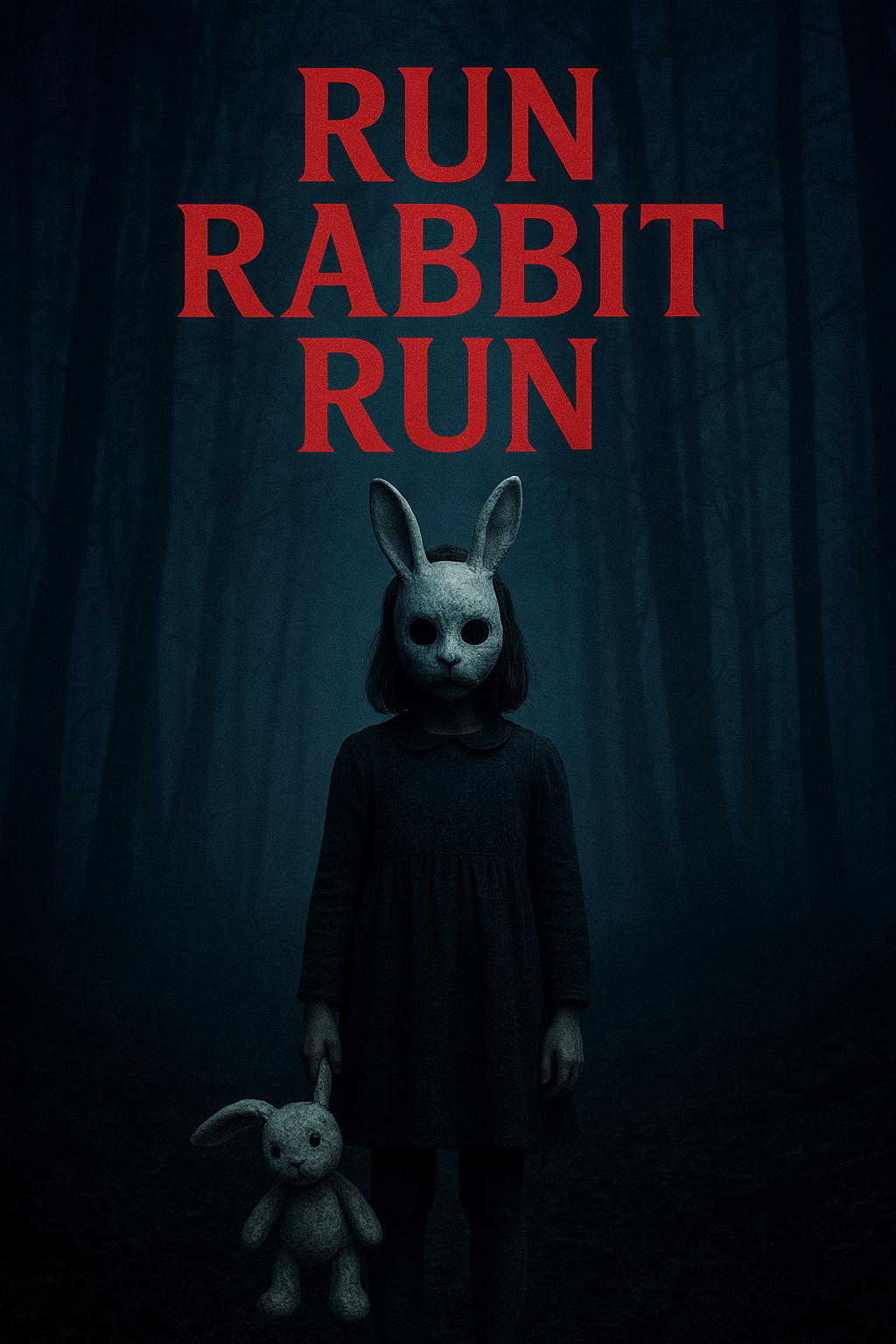
Run Rabbit Run is a 2023 Australian psychological horror film directed by Daina Reid and written by Hannah Kent. It stars Sarah Snook as a fertility doctor whose young daughter begins displaying unsettling behavior that seems tied to long-buried family secrets. The film premiered at the Sundance Film Festival on January 19, 2023, and was later released worldwide on Netflix on June 28, 2023. Running about 100 minutes, the movie blends themes of trauma, memory, and identity, with strong performances, especially from Snook, driving its eerie, slow-burn atmosphere.
First Thoughts
I think I have seen this movie, since it came out, at least six times, and I could still re-watch it. It is for me a very rewatchable movie, but not necessarily a family friendly or a comfortable one. I have to mention that at the same time it is quite surprising to hear and read unfavourable thoughts with respect to Run Rabbit Run. But maybe the problem lays in the marketing of the movie. About this I will write in the very next section, called “red herring”.
All-in-all, I love it, and I think that Sarah Snook who plays Sarah, the mother, is very convincing as a confused, hurt and traumatized woman. Trauma plays an important role here and the word itself comes from Greek and it means wound, and from German it means dream. Both wound and dream play a significant part in the film.
Red Herring
Red herring is a technique used in films to deliberately mislead the audience from what is actually happening. The most found examples are usually in horror movies where you are tricked into thinking that the killer is a certain character only to discover later that it was not the case.
A red herring referred literally to a herring fish that had been strongly salted and smoked (or otherwise cured), a process that turned its flesh reddish and gave it a very strong odor. For a long time, one popular explanation held that hunters used such pungent herrings to mislead, or to train, scent-hounds: a smoked/red herring would be dragged across or near a hunting trail to distract the dogs away from the real scent. This use, whether real, exaggerated, or apocryphal, eventually led to the metaphorical idea: just as a red herring distracts dogs from the real trail, a red herring in film misleads people from the true topic.
Now, what I mean with this technique with respect to this movie is twofold:
First, the movie was marketed as a horror one, when in fact you discover that it is a psychological thriller. However, as you can see from the IMDB link if you clicked on the movie title in the very first sentence, it is labeled as psychological horror, psychological thriller, horror, mystery, drama, thriller. The truth is it has a bit of all, but horror would be the last thing to cross my mind. It has extremely few elements that are sort of horror.
Second, within the movie, Mia, the daughter, plays a red herring, in the sense that you think that she is the problematic character that we are focused on, when in reality it isn`t so.
A Brief and Incomplete Summary of the Movie
Sarah is a fertility doctor and a single mother who seems to have life under control. But when her young daughter, Mia, begins acting strangely after a mysterious gift (a white rabbit) their ordinary world unravels. Mia’s unsettling behavior and obsession with the rabbit trigger memories and fears from Sarah’s past, forcing her to confront hidden grief and unresolved trauma.
As Sarah struggles to understand what’s happening, the film drifts into psychological ground: the boundaries between trust and doubt, reality and memory start to blur. The unsettling atmosphere creeps in slowly: the rabbit becomes an ominous symbol, everyday objects turn eerie, and what should be safe (home, parenthood, family) grows unstable. The tension isn’t driven by gore or jump-scares, but by growing dread, emotional tension and the breakdown of a mother’s sense of security.
Run Rabbit Run explores themes of motherhood, trauma, identity, and the fragility of the mind when grief and guilt resurface. If you are interested in reading about guilt from a Nietzschean perspective, you can check my review on his book, Genealogy of morals.
Analysis of the Movie
I will leave some thoughts based on the notes I made while watching the film the last time.
Some First Remarks
This is a multilayered movie, which reminds me of how Christopher Nolan structures his stories. Run Rabbit Run starts with a haunting score and then we see a few overlaping images. They are not random. They are essential to the story.
The first misleading trail of the story it is, I think, when Mia speaks with her mum in the car and tells her she misses her grandmother. But Sarah says that this is absurd since she never met her. Then Mia replies: “I miss people I`ve never met all the time.”
The line is written in such a way making the viewer think there is something wrong with the little girl. After reapeating viewings, I still do not know if it is in the mind of Sarah or it is just a symbolic scene. Either way, it is a strange scene.
The wounds
A reccurent aspect of the movie is the wounded daughter. You ask yourself who is hitting her. On a rewatch you would notice that everytime when the discussion is focused on a third character that is suddently mentioned before the half of the movie, which is Alice, Mia is either seen in the next scene as bleeding or she is heard as screaming. Either way, the one who is “punishing” her is her mother who is not in control of her feelings, because they are repressed.
Now, this may be a missinterpretation, but I do strongly believe it is the case, even when you see that the first time Mia wears the mask it looks like it happend before her mother is being abusive. However, if you check the scene again and the ones before it, you would see that Sarah was bitten by the rabbit when she wanted to get rid of it. That night she has a vision of her sister, Alice.
The next day when she dropps her daughter at school her line is “you have furr all over you”. This implies that she got angry on Mia for keeping the rabbit. She also says: “love you, bunny”, which ties symbolically with the rabbit theme.
Later in the movie Sarah thinks she sees Mia bleeding from her head, and takes a scissors to cut a piece of her hair to see where it comes from. All this is happening with the light off. When she opens it she realizes that the only blood on her daughter is the one she just caused it with the scissors.
Hints to the Traumatic Past
Somewhere in a very early scene when Sarah is visited by her ex husband with his new girlfriend and her child, the boy hits Mia. Sarah gets angry and yells at the boy saying: “you don`t hit!” Although this is what she does throughout the movie, which means that at a conscious level she is a normal person, but deep down she is ripped apart by trauma.
A very interesting scene which is created in such a way that on a repeated viewing you would certaintly understand the subtility is when Sarah goes with Mia to see Joan, the grandmother. On their way there, Sarah stops the car believing she hit a bird. When she gets down the car checking for any injured bird, her daughter says she saw nothing. And when she asks why would she be worried even if it were the case, Sarah says that it might be injured and it might be suffering. Then the question Mia asks makes her mum suddently stop: ” Will you kill it?”
The Hospital Scene
Mia is very excited to see her grandma for the very first time. When they arrive there, Joan barely recognizes her own daughter, Sarah, but when she sees her granddaughter, Mia, she looks at her in a blend of awe and unbelievable shock. And this is the moment where a new character is introduced, which shifts the movie in a new direction. It is a very wise decision for the creators of the movie to do that. A different example of direction shift happens also in Mullholand Drive at the Silencio theater when the character played by Naomi Watts starts convulsing in the chair. But then you ask: why her?
In that moment, Joan calls Mia “Alice”, which makes Sarah look confuse at her own mum and very troubled. This is the moment when you ask yourself who is Alice and why didn`t we hear this name up until this point. Later, Mia, most likely as a childish caprice, wants her mum to call her Alice and she tries to impersonate her. This, in the film, is another red herring. Mia is still Mia, but it plays out like the ghost of Alice would posses her, which is not the case at all.
You Are a Good Girl
Now, you can look into stories carefully, either movies or books, and detect what is the core of it. What I mean by this is that situation to which you can resume all you have watched or read. A good example I have in mind is my favourite book, Lolita by Vladimir Nabokov, in which a middle aged man tries to justify to his readers his undying passion for the so-called nymphets. And he does that somewhere in the beginning when the narrator, who is at the same time the main character, confesses that he might have reincarnated Annabel into Lolita. When you re-read the book you will understand that without that you would not have the book at all.
Similarily, when watching Run Rabbit Run, there is a scene exactly halfway through where Sarah is looking in the old boxes from her dead father. She finds a blouse of his, she wraps it around her as if he would hug her and, snobbing, she says: “youre a good girl!”
What this means, I think, is that her father did not believe Alice dissapeared, and that Sarah was guilty in some way, but he forgave her. That is why she was more close to her dad and estranged from her mum, as the doctor mentiones as well. Because her mum, who also never believed the dissapearance, did not forgive Sarah. That is why at the hospital, in one of the visits, Joan bursts at Sarah and tells her in tears that she (Mia) is not safe with her.
The Reveal (Spoilers)
In the final act, Sarah takes Mia back to her childhood home, the same place where her sister Alice “disappeared” as a child. Throughout the film, Mia reenacts behaviors, memories, and phrases that Sarah associates with Alice. This leads Sarah, already unstable, to slowly accept the possibility that Mia might be Alice returning, or that she has been confronted by a truth she buried.
The ending reveals the core of Sarah’s trauma: Alice did not dissapear. Sarah was responsible for her death. When playing hide and seek, Sarah locked her sister in a closet near their house in a utility shed. When Alice comes out and snaps at her sister, Sarah hits her with a rabbit trap, injuring her. Being afraid of the consequences of her action, she pushes Alice off the cliff into the water. The very first scene of the movie shows Sarah lying down in the sand near the water, as if she is not yet cured of guilt.
In the scene before the final one, Sarah talks to Mia but imagining it is Alice and ask her for forgiveness. She tells her that she lied to their mum, saying Alice ran away. Now, this makes me rethink the situation with her father. The fact she only mentions her mum probably means she did tell her father, but he kept it a secret. And the “you are a good girl” scene has now a new meaning.
Alice replies: “You are a monster!” And Sarah responds in the same manner, which means she finally excepts the truth.
The Ending (Spoilers)
The very final scene is when, after the dialogue, Sarah falls asleep. When she wakes up, Mia is not there anymore. Her ex husband, who came for being worried because Sarah was not answering her phone, is seen in the other bad across the room with a pillow on his head. When she goes looking for her daughter in the other room, she looks over the window and, in a state of shock, she sees Mia walking away with Alice holding hands. She starts hitting the window and shouting after her (or them) but they are still going away towards the cliff.
I think that what is here heavily implied is that Sarah went insane and killed both her ex and her daughter.
Remaining Remarks
It must be mentioned that the story starts unfolding when, at the beginning of the film, we see Mia celebrating her birthday. She turned 7, the same age Alice had when she died.
Mia tells her mum at some point that grandpa confessed to her that he wanted after his death to come back as a pelican and keep an eye on Sarah, which was his little secret with her granddaughter. This yet again would most likely mean that he knew what Sarah did.
When talking to Mia about Alice, Sarah mentiones she had dark hair and freckles, exactly like Mia. The fact that they look alike might have been one of the factors which triggered Sarah into starting to remember about the past and her act.
Another trigger were the bunnies. Sarah also tells her daughter that her father used to haunt wild rabbits. The tool she used to hit her sister was a rabbit trap.
In few scenes we see a dark rectangular being drawn on Mia`s school papers. But we find out in the end that it was Sarah drawing them. When her ex comes to check on her at the childhood home, she was unconscious on the floor drawing the dark rectangular. It represents the closet where she locked her sister. It was a way of her subconscious to point out that she was guilty by locking Alice in it.
On her last visit to the hospital, Joan asks Sarah if she found her (Alice). Sarah says she is dead, but her mum for the first time says that she does not think that. This was due to her dementia. She most likely always believed Sarah did something to her.
All-in-all, I strongly recommend it! But if you already read this review, the movie was spoiled to you.