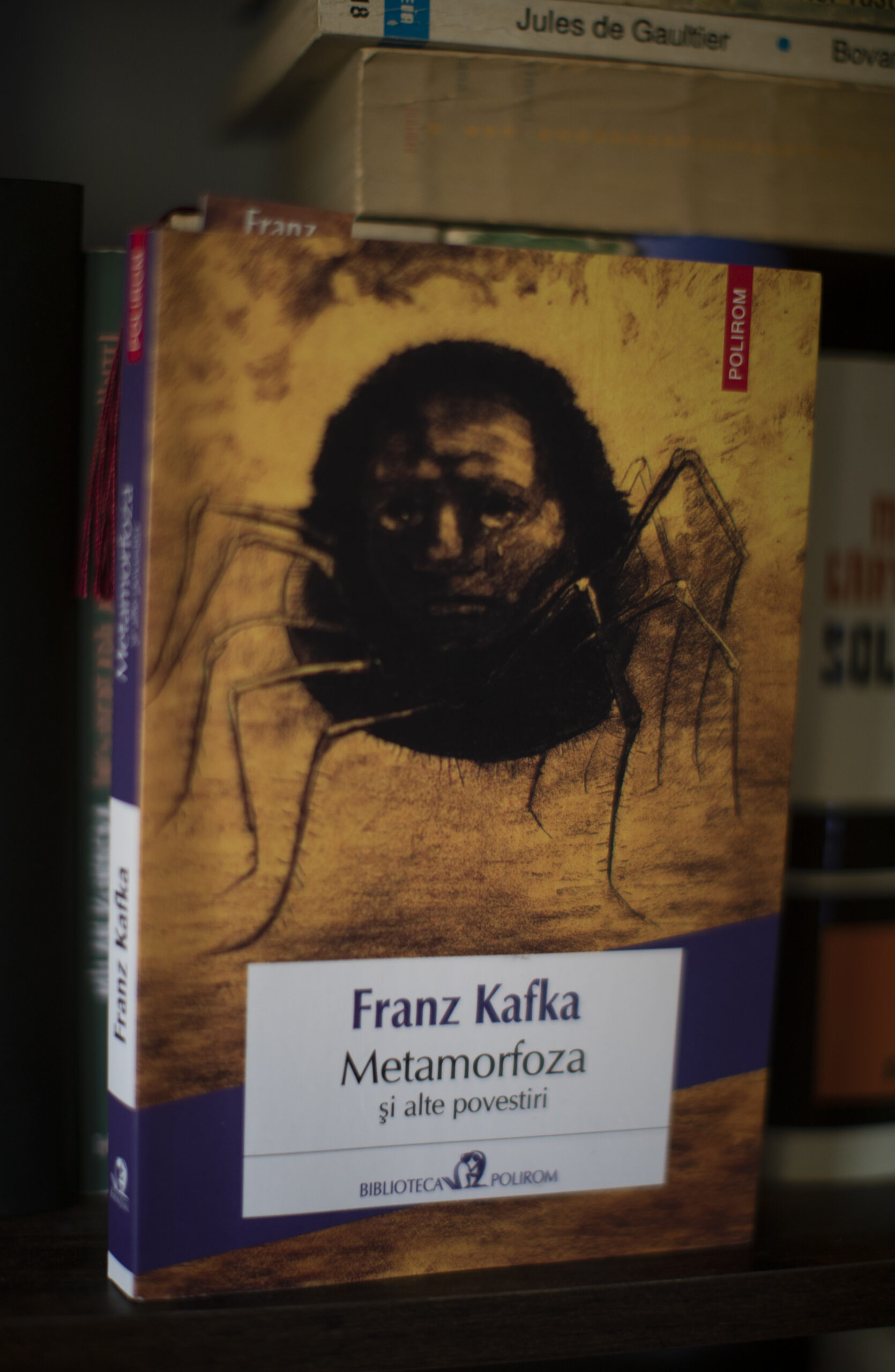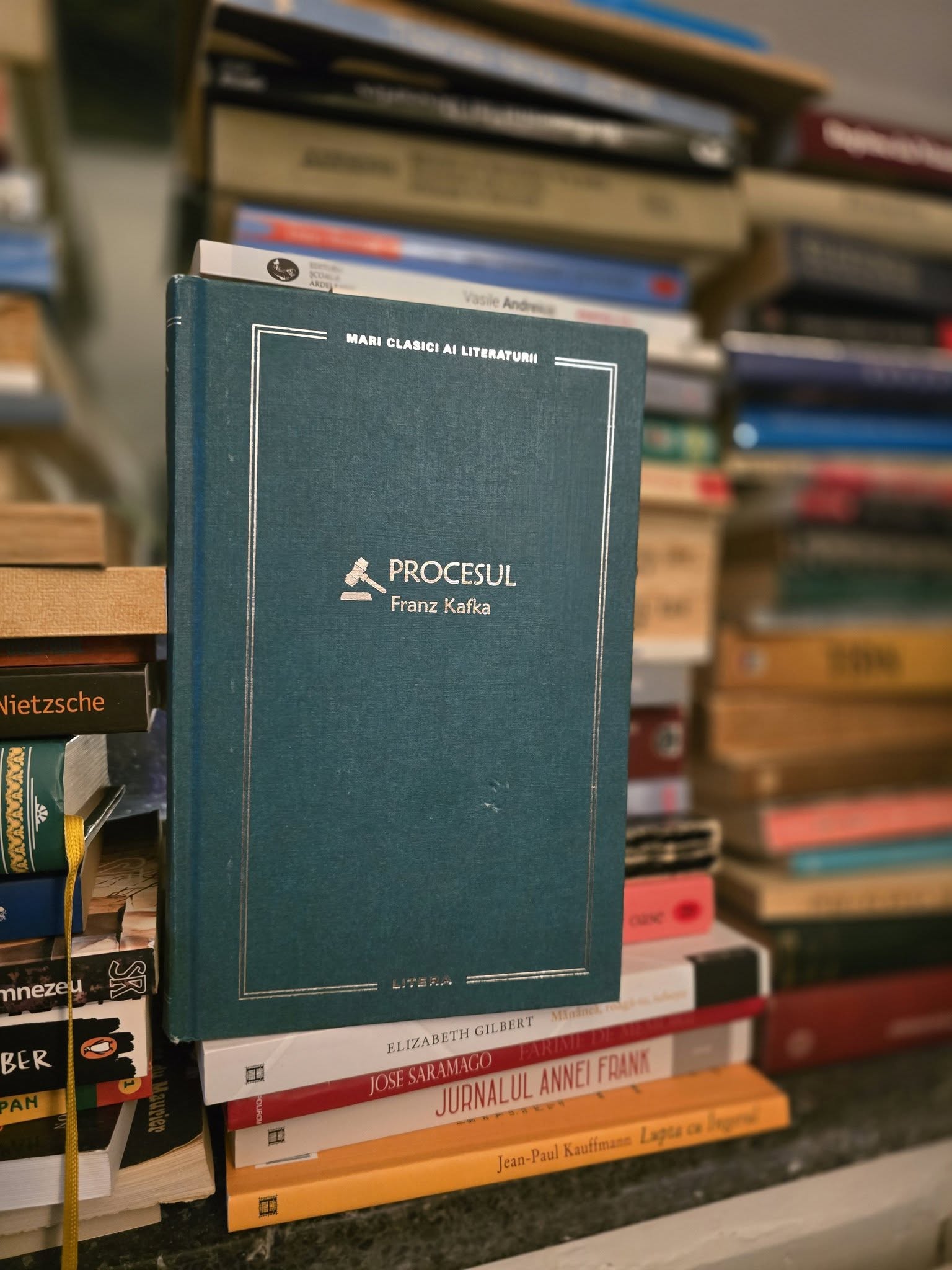
General Information About the Book
The Trial (originally titled in German as Der Prozess) is a seminal work of 20th-century literature by Franz Kafka, who was born in Prague in 1883. Although he wrote in German, only a few of his works were published during his lifetime; The Trial was published posthumously in 1925, a year after his death from tuberculosis in 1924. The novel’s survival is credited to Max Brod, Kafka’s friend and literary executor, who ignored Kafka’s request to destroy his manuscripts and instead edited the work for publication, adding an Epilogue.
The English translation was produced by Willa and Edwin Muir. The book was first published in Great Britain in 1935, reissued in 1945, and released as a Penguin Modern Classic in 1953.
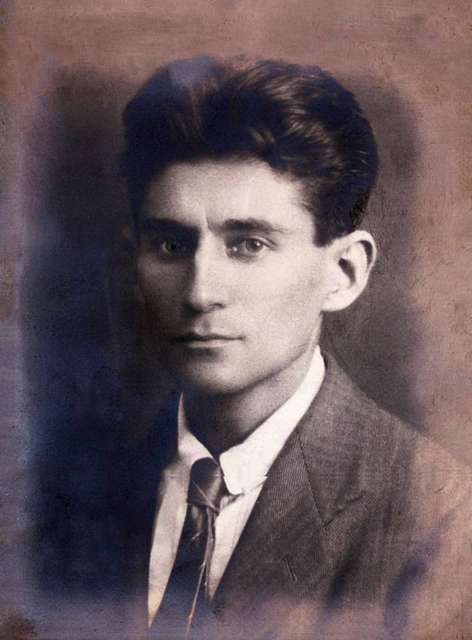
Kafka’s biographical background as a Doctor of Law from Prague University and his career as a clerk in the Workers’ Insurance Office heavily influenced the book’s legal themes. The novel is famous for its narrative omissions, most notably the last name of the protagonist, Josef K., and the nature of the “guilt” for which he is arrested. Furthermore, the city and country are never explicitly named, though internal evidence (such as the presence of a Catholic Cathedral and the Vltava-like river island) strongly points to Prague. Critically, the work is interpreted as a dream-like universe where the real and the absurd coexist, representing a struggle for the justification of one’s own existence.
A Brief Summary of the Book
Franz Kafka’s The Trial follows Josef K., a high-ranking bank official who is unexpectedly arrested on his thirtieth birthday for an unspecified crime. Despite the arrest, K. is permitted to continue his daily routine, but he soon becomes consumed by the need to defend his innocence against a nameless and incomprehensible Law. His struggle leads him into a labyrinthine judicial system that operates out of suffocating offices hidden in the attics of poor suburban tenements.
K. initially attempts to challenge the Court through logic and defiant speeches, as seen during his first interrogation, but he gradually shifts to seeking personal influence. He consults several intermediaries, including his uncle Karl, his advocate Huld, and the Court painter Titorelli. From Titorelli, K. learns the grim reality of the system: a “definite acquittal” is a legendary event that never actually occurs. Instead, the accused must choose between “ostensible acquittal,” which allows the case to be reopened at any time, or “postponement,” which keeps the trial perpetually in its earliest stages through constant legal maneuvering.
K.’s focus on his case eventually erodes his professional life. After witnessing the humility of Block, a commercial traveler broken by a five-year trial, K. decides to dismiss Huld and take charge of his own defense. However, in a cathedral, a prison chaplain informs K. that his case is going badly and recites the parable “Before the Law,” illustrating that the door to the Law is intended only for the individual yet remains permanently closed to them.
On the eve of his thirty-first birthday, two men lead K. to a quarry and execute him with a butcher knife. He dies “like a dog,” (p 292) haunted by a shame he believes will outlive him.
What is the Original Sin?
Jonathan Edwards’ doctrine of original sin, as outlined in his treatise The Great Christian Doctrine of Original Sin Defended, encompasses two primary elements: innate depravity of the heart and the imputation of Adam’s first sin to his posterity. Edwards posits that a person’s nature is an underlying inclination that governs all moral choices. Though Adam was created with a holy nature, his first transgression introduced an evil disposition that was subsequently confirmed by God as a fixed principle.
To explain how this corruption reaches all mankind, Edwards introduces the concept of metaphysical unity. He uses the metaphor of a tree, where Adam is the root and his descendants are the branches; though separate in time and space, they constitute one single identity. Edwards argues that God’s continuous creative activity joins each new human being to Adam, causing Adam’s sinful inclinations to flow naturally into the hearts of all his descendants.
Edwards justifies the punishment of Adam’s descendants by arguing that they were not merely passive victims, but willing participants in the first sin. Because of their moral union with Adam, the hearts of all descendants willingly consented and thoroughly approved of his choice to eat the forbidden fruit. Thus, Edwards contends that the sin is properly theirs, and God’s imputation of guilt is based on this actual moral concurrence rather than an arbitrary legal decree.
This doctrine differs from the realist view, which sees one human nature split apart, and the federal view, which relies on a purely legal covenant. Edwards instead emphasizes an organic moral union that preserves both the inherited nature and individual accountability. He maintains that humanity is born with a fixed propensity to sin that requires divine intervention for restoration.
The Trial and the Absurdity of the Original Sin
When reading the novel, I cannot help but see a theological undertone, although this might not have been the author’s attempt. Maybe not ultimately, but there is a religious element there. You just need to think of the penultimate chapter of the book, where Joseph K speaks with a priest. The priest, who just plainly says to K. “you are deemed guilty” (p 270) tells him a parable.
In this chapter, the prison chaplain recites “Before the Law”. It tells of a man from the country who spends his entire life waiting for entry into the Law, only to be blocked by a doorkeeper. As the man dies, the keeper reveals “the door was intended only for you and will now be closed” (p 275).
But what does this mean exactly? A way of understing it is viewing it as a paradoxical allegory showing that religion offers sympathy but no actual resolution for ontological guilt. It is a moral test; a test where authority refuses to provide the correct answer, forcing the accused to judge their own delusions.
Let us be clear, the most challenging omission in the novel is the nature of K.’s guilt, as there is no mentioned law, formal accusation, or investigation. This mirrors the Christian concept of original sin, where an individual is deemed guilty from birth without a personal act of transgression. K. is any man searching for a resolution to an inescapable burden that exists in the attics of the human mind. Just as the transgression in Eden is obscured in allegory, K.’s arrest is a painfully certain phenomenon that mirrors the universal feelings of anguish and internal judgment.
The Absurdity in K.’s Character and the Absence of a Code
Would it be strange to say that Kafka viewed claiming the status of a victim as a form of original sin? Maybe. In this view, the absurdity lies in K.’s refusal to accept responsibility for his own character; he remains unconcerned with others and uses appeals to humanity only to exculpate himself. The Court, acting as a sensitive moral agency, is attracted by guilt, specifically K.’s failure to live as a responsible social human being. The absurdity is not that K. is innocent, but that he is incapable of recognizing his own moral failure while focusing on the Court’s corruption.
The core of the book’s absurdity may also be the absence of a code adequate to the messages K. receives. In a traditional religious framework, redemption is possible through a known Law or code; however, in The Trial, any code K. believes he identifies is eventually negated. This makes redemption an impossibility of interpretation. Even the Prison Chaplain’s parable reinforces this by showing that the door to the Law is intended only for the individual, yet it remains permanently closed to them.
Concluding Thoughts
We can imagine how various human institutions that are represented by the Advocate (Psychoanalysis), the Painter (Art), and the Chaplain (Religion) fail to provide a path to redemption. I use the nouns in capital letter as seeing them as archetypal characters.
• Religion offers only a “paradoxical allegory” and a demand for faith that K. finds intellectually dishonest.
• Psychoanalysis (represented by Huld) only increases K.’s self-consciousness of his degradation without offering actual release.
• Art (represented by Titorelli) can describe the judges but is unable to enact a solution for the accused.
The ultimate absurdity is that K. is executed for a crime he never understands, and his shame is so profound that it outlives his death.
If you are interested in the notion of guilt, you can also read my review on Nietzsche’s Genealogy of Morals.