
Introductory Thoughts
” We do not deny that faith makes you happy: that is precisely why we deny that it proves anything — a strong faith that makes you happy is a suspicion of the thing you believe in; it does not substantiate the truth, it substantiates a certain probability — that of deception” (p. 204).
I am continuing the series with Genealogy of Morals, my favorite work by Nietzsche. The style is more academic, but it still retains the rhythm, irony, and wordplay that readers are accustomed to.
Nietzsche assumes the position of a genealogist, who is a kind of historical psychologist, and seeks to investigate the roots of morality, exposing their contingent nature. This is, in fact, the kind of position that people in general should adopt in order to combat the inherent tendency to take things at face value.
There are still many among us who consider the Bible to be a monolith between two black covers. But have they ever wondered how it came to be perceived in this way? Not to mention that not everyone had access to it. Some were burned just for translating it, so that it could reach the hands of the common people. The average person today has a luxury that was lacking in the past. But as Ortega Y Gasset rightly said, today’s technology and liberal democracy give the false impression that our way of life is generated by Nature, and not created by man.
Succesive Approximation
Successive approximation is a method of thinking or problem solving that consists of gradually approaching a result or complete understanding through small steps, each step correcting, adjusting, or developing the previous one. Using something similar to a method of successive approximation, Nietzsche, as interpreted by Reginster, refines and deepens his investigation by progressively expanding the sphere of suffering he seeks to understand.
In the first dissertation, the sufferings generated by the deprivation of a higher social and political status give rise to the slave revolt in morality; in the second dissertation, the sufferings associated with the constraints imposed by socialization on instinctual satisfaction lead to the emergence of bad conscience; and in the third dissertation, the sufferings that are part of the human condition (wounds, failures, deprivations, illnesses, and losses that are the inevitable fate of human beings) give rise to ascetic ideals.
Thus, this book is structured in three parts (or dissertations). Let`s analyze them one by one!
The First part of the Book or the First dissertation
Here, Nietzsche distinguishes between two types of morality: master morality, which is based on the difference between good and bad; and slave morality, which uses the opposition between good and evil. Initially, “good” was not a moral or altruistic term, but one used by the nobility and the ruling classes to describe themselves and their way of life, i.e., strong, vigorous, healthy, and life-affirming. By contrast, those who were poor, weak, or of low birth were simply considered “bad” in a non-moral sense, more precisely common, “vulgar, plebeian, lowly” (p. 55). Thus, “good” originally expressed a sense of superiority and affirmation of life, not a moral obligation or universal standard.
In support of this distinction, Nietzsche sets out in this first dissertation to explain how the slave revolt arose as a reaction to a pre-existing noble morality, how the slave morality eventually conquered the noble one, and how it gained supremacy under the banner of Christianity, within the broader development of European civilization.
Slave Revolt in Morality
But what is this revolt? It refers to the establishment of an alternative morality by slaves in which unjustified suffering became the most reliable indicator of goodness. In this way, slaves were able to transform the suffering endured at the hands of their oppressors into virtue. They thus learned to derive enormous power from a position where they were powerless. Nietzsche is therefore convinced that the virtues associated with altruism and selflessness, which are undoubtedly honoured today, arose in the context of this revolt, whose practitioners were excluded from cultivating the more natural virtues of selfishness and individualism.
But of course, we cannot see this, since it happened a long time ago. Judea defeated Rome, as Nietzsche would say. But who has eyes to see? “Do you not have eyes for something that took two millennia to triumph? There is nothing surprising here: everything that is long-lasting is difficult to see, difficult to discern” (p. 62).
An important concept in this chapter that should be mentioned is ressentiment (in the French form). Ressentiment is a key psychological concept that refers to the deep, smoldering resentment felt by individuals or groups who are powerless to exercise their instincts for power, aggression, or revenge. Unlike immediate anger, ressentiment is repressed and internalized, leading to a reactive moral framework. Nietzsche argues that ressentiment gave rise to slave morality, where the weak, as mentioned earlier, unable to express their will to power, redefine values in their favor.
The Second part of the Book or the Second dissertation
Here, Nietzsche offers an alternative to the origin and evolution of the concept of responsibility. He says that people were held responsible through a long and violent process of formation. Central to this theme are his explanations of the origin of conscience (through the internalization of aggressive instincts) and the acquisition of memory (through painful techniques of forced implantation).
Bad Conscience
Nietzsche’s hypothesis regarding the origin of bad conscience is that it arose when human beings were forced to suppress their natural instincts, especially aggression and cruelty, due to the transition from pre-social nomadic life to structured, civilized societies. In the wild, human instincts could be freely discharged externally; but once individuals were subjected to social constraints, laws, and punishments, especially under the authority of the state, they could no longer express their instincts externally. As a result, these impulses were turned inward, leading to the creation of an inner world and the formation of conscience. This inward turn caused people to direct their aggression toward themselves, generating guilt, self-punishment, and psychological suffering.
Noting the similarity in German between the words duty and guilt, Nietzsche traces the origin of the concept of responsibility to the primitive concept of duty. He explains that initially the concept of duty referred to an external, economic obligation to avenge an injury or a broken promise. Over time, this idea was internalized in the form of guilt. This change transformed social justice into inner torment, with guilt becoming a tool through which religious and moral systems control people. Thus, guilt marks a crucial moment in the rise of bad conscience and internalized morality.
Nietzsche recommends that his readers become aware of inherited feelings of guilt and ascetic values, critically examine their origins, and transform their relationship with them. Instead of being controlled by guilt and self-denunciation, individuals should use these feelings as an impetus for self-transcendence, creativity, and life affirmation. By accepting their instincts and redefining their values around power and freedom, they can transform burdens into sources of personal power and growth.
The Third part of the Book or the Third dissertation
Nietzsche seeks to explain what it means that ascetic ideals have exerted a powerful influence on the evolution of Western civilization. He believes that the preponderance of the ascetic ideal means that no other ideal has presented itself for adoption. This means that the ascetic ideal serves the greater interests of life itself.
What is the Ascetic Ideal?
The ascetic ideal, as Nietzsche explains, is the value system that praises self-denial, discipline, and the rejection of bodily pleasures and instincts. It is most clearly embodied by priests, philosophers, and artists who see suffering, poverty, and chastity as signs of virtue. Its main function is to give meaning to suffering, especially for those who feel powerless or lost in life. By interpreting suffering as spiritually valuable or salvific, the ascetic ideal gives individuals a reason to endure pain, thus transforming their misery into something with a moral or metaphysical purpose. Nietzsche tells us that science is not the conqueror of the ascetic ideal, but its final refuge.
A spiritual leader who gives meaning to the suffering of the weak is the ascetic priest, who interprets pain as a form of moral or spiritual growth. He manipulates resentment, turning his followers’ hatred inward, playing an essential role in creating a moral system that values weakness and obedience over power.
Nietzsche insists that the ascetic priest is not a genuine healer because, although he claims to cure suffering, he does not address its root causes nor does he truly alleviate it. Instead, he reinterprets suffering through the lens of guilt, sin, and moral failure, transforming it into something supposedly meaningful or deserved. In doing so, he preserves and even deepens the illness, keeping his followers dependent on him for guidance and spiritual comfort. A true physician would seek to cure the illness or relieve the patient of suffering, but the ascetic priest exploits suffering, using it to gain power and moral authority over others.
The Will to Nothingness
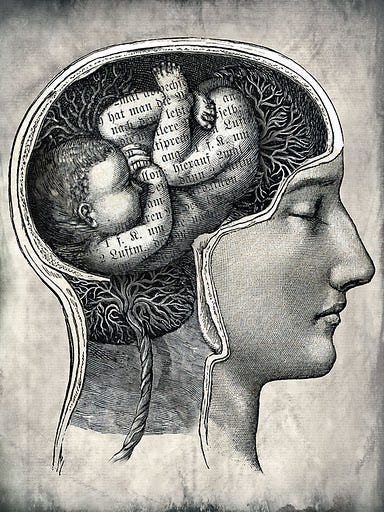
If Nietzsche’s readers wish to facilitate the self-destruction of Christian morality, they must be prepared to host its final and fatal act of self-interrogation. If they do so, they will have no choice but to unleash upon themselves the will to nothingness that animates their will to truth. The will to nothingness is, for Nietzsche, the desire for meaning or order so strong that people prefer to believe in nothing or accept destructive values that deny life rather than endure a world without absolute truth or moral foundation.
This occurs when traditional values, such as those based on religion or ascetic ideals, begin to collapse, but new values that affirm life have not yet emerged. Instead of affirming life in all its chaos and uncertainty, people turn to nihilism, even preferring suffering or self-destruction to meaninglessness. “Man would rather will nothingness than not will at all” (p. 219).
To prepare for this situation, Nietzsche urges us to reevaluate our values, reject inherited moral systems, and create new values that affirm life, individuality, and power, thus paving the way for the emergence of the Übermensch, the one who can face the abyss and still say “Yes” to existence. If anyone is interested to read about the notion of Ubermensch, I would advice you to check my review on Zarathustra.
Ultimately, this book is intended to recruit readers and friends who will risk their lives to ensure the final collapse of Christian morality.


5 thoughts on “Good & Evil vs Good & Bad, Guilt & Bad Conscience, Ascetic Ideals”