Can non-human animals be a part of democracy?
What is democracy? It can be defined as a political system in which every member of the society has equal right of sharing political power. But can non-human animals fit the criteria? I will argue in this article that, although there are signs of democracy in the animal kingdom, it is doubtful that they can be part of human democracy. I will first give some examples of politics in the realm of animals to showcase that they are in their own way political agents, after which I will mention some fundamental distinctions between humans and animals which will exhibit the difficulty of including them in our democracy.
Similarities and differences
I will first state that at least in their kingdom, animals do have politics, and their world is structured in such a way that it functions in a democratic manner.
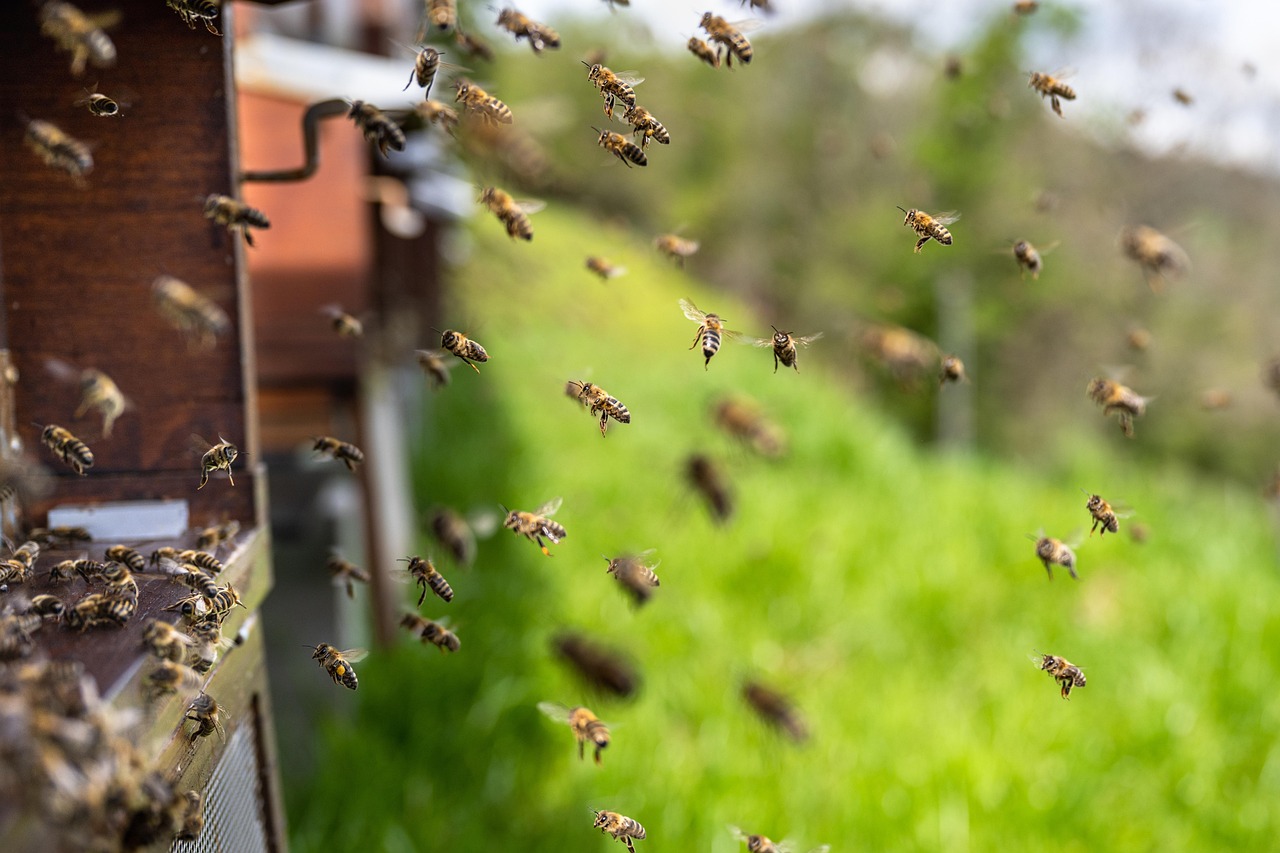
Science journalist, Russell McLendon (2012) informs us that red deers of Eurasia spend days grazing in a certain place, and then decide going to new greener locations by voting, which consists in 60% of the group standing up. An interesting kind of voting is found in the bee world. When they are seeking for a new location, it requires a number of 15 bees hovering in an enthusiastic waggle dance, after which they fly back to communicate it to the other honeybees and the entire swarm moves to the new elected spot. Other examples involve chimpanzees, African buffalo, cockroaches, baboons and pigeons.
Secondly, some clear distinctions would help us understand paramount differences between humans and animals. One of them is Logos. The use of the word in capital underlines the double meaning of it: language and reason.
It is true that animals do not speak our language, but this fact does not reject the idea of communication between the species. Moreover, humans themselves can be born mutes or they can lose their voice during their lifetime, and still can actively participate in the development of society. Even so, a clear communication between people and animals is to be addressed here.
The other crucial factor is reason. Reason is used to guide consciousness. A Romanian psychologist, Andrei Cosmovici (1996, p 58-59) tells us that there are two types of consciousness: implicit (found in superior animals) and explicit or reflexive (typical to humankind).
Biocentrism in Politics. Do Worms Have a Political Voice?
In her book, When Animals Speak: Toward an Interspecies Democracy (2009), Eva Meijer is arguing that animals speak and act politically. This article deals with one of the book`s chapters, “Worm politics”. The text is an exploration of the political dimensions of human-worm relations. It delves into concepts like agency, justice, and respect concerning earthworms. The author encourages a revaluation of these relationships, emphasizing the need for a non-anthropocentric view of politics and suggesting that current political practices should be reconsidered in the context of interactions with non-human animals.
Although I am inclined to agree with the author`s position regarding suppression of our anthropocentric view of politics, seeing worms as political agents it is debatable, depending on what the concept of political agency relies on. I will argue against anthropocentrism, see if there are possibilities for political human-animal relationships, after which I will conclude by asking if worms have a political voice.
Anthropomorphism
I will first discuss the notion of anthropocentrism, which is central to Eva Meijer`s text because she challenges this view by advocating for a more inclusive approach to considering the interests and agency of non-human animals, such as earthworms.
For a considerable amount of time humans felt that everything revolves around them. Setting men in the centre of the world and even of the universe became a belief attached so tight to consciousness, that trying to reconsider this position regarding various aspects comes with great opposition. But we did prove wrong the anthropocentric view of the world through the discoveries and works made by Copernicus, Darwin and Freud.
As a matter of fact, in 1917 Sigmund Freud wrote a short essay, where he proposes “to describe how the universal narcissism of men, their self-love, has up to the present suffered three severe blows from the researches of science”: cosmological (where the heliocentric view replaced the geocentric view), biological (which states that humans are not the crown of biblical creation) and psychological (we have a subconscious that we cannot control). I would here add a fourth blow to our narcissism, a sociological one, stating that this is a world inhabited by everybody, not only by humans.
Similarly to Freud`s realization of human narcissism, Eva Meijer clearly understands our reliance on the anthropocentric view over the world. In the “Worm politics” chapter, she examines the power relations inherent in scientific experiments involving earthworms, focusing on the anthropocentric tradition in science. She critiques the prevalent attitude in scientific studies where worms are often studied for their ecological impact, not for the sake of understanding worms themselves.
Drawing on Foucault`s concept of apparatus, Meijer describes how the power-knowledge nexus operates in the context of an ecotoxicological experiment where earthworms are used to understand soil conditions (p 157). The experiment, conducted in a university setting, reveals the influence of academic, financial, and moral structures on knowledge production. Meijer argues that in capitalist and anthropocentric societies, the relationship between gaining knowledge and exercising power is evident, with humans shaping experiments and interpreting worm behaviour, while the worms themselves, though exhibiting agency, have no say in the conditions under which they live. The discussion extends to various contexts where humans dominate the lives of earthworms, prompting questions about justice for earthworms.
Moreover, she suggests that an anthropocentric perspective, which centres on humans and excludes or marginalizes non-human animals, needs to be reconsidered. Meijer advocates for respecting and regarding other animals, using earthworms as an example. She points out that a non-anthropocentric view requires curiosity, politeness, and a recognition of the interconnectedness between humans and non-human animals: “developing a non-anthropocentric view of politics asks us to reconsider the borders of the political and to develop new forms of interacting with other animals” (164).
Political voice
Having argued against anthropocentrism, I will turn now my attention to the notion of political voice, which is another way of expressing the term political communication, mentioned by Eva Meijer herself in “Political Communication with Animals”(2013). She states that the theory is based on a multitude of human-animal interactions and, moreover, there is a need to eradicate the stereotypical image that animals are silent or mute in relation to politics (p 1).
Those are starting points for thinking about forms of democratic interactions with non-human animals. The concept of ‘dependent agency’ raised by Donaldson and Kymlicka (p 4), where animals can exercise agency through close relationships with humans, sounds promising but is limited to some of the domesticated animals. How can worms have a voice? Ewa Meijer would say that people define language in a narrow sense, but we ought to see it as a collection of language-games (p 5), an idea borrowed from Wittgenstein, who thought that language is used in many ways. She is arguing for the existence of interpreters that would facilitate the conversation between a human and an animal.
Thus, Meijer explores the idea of political voice for non-human animals. She argues that animals have their own ways of expressing themselves and engaging in a form of political communication (p 9). Meijer challenges the anthropocentric view that limits political agency and voice to humans, emphasizing that animals, through their actions, behaviours, and interactions, contribute to shaping the political landscape.
She suggests that paying attention to the ways in which animals communicate and participate in their environments can lead to a more inclusive understanding of politics. By recognizing and valuing the diverse ways in which animals express themselves, we can move towards a more inclusive and ethically informed political framework that considers the interests and agency of non-human animals.
Earthworms as political agents
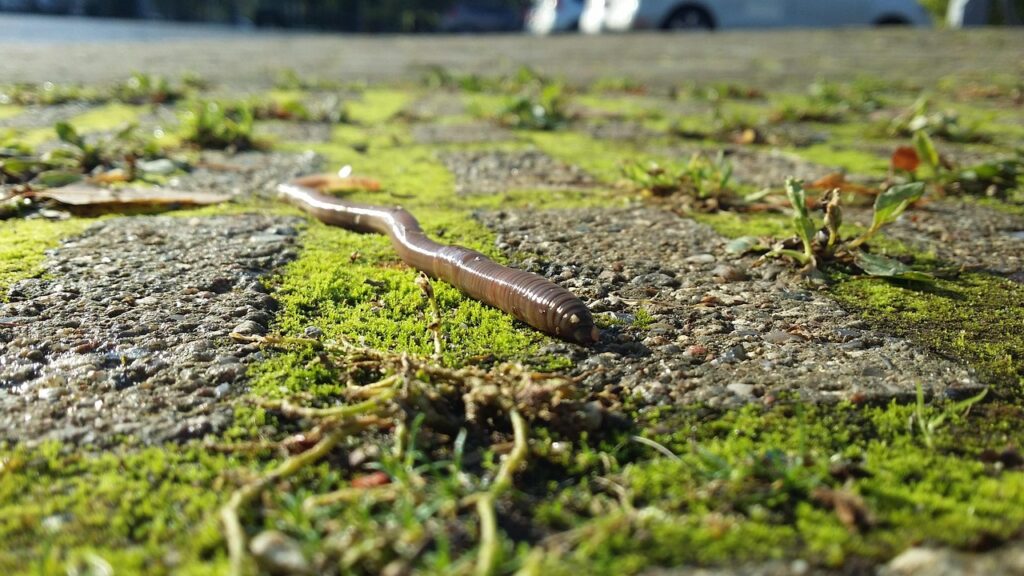
I have argued against anthropocentrism and made the case that non-human animals can have a political voice. We now need to ask ourselves if worms themselves have a political voice. Eva Meijer’s exploration of political communication with animals, as well as her consideration of earthworms in “Worm Politics”, suggests a nuanced perspective on whether worms have a political voice.
In her essay, Meijer argues for recognizing the political agency of animals and the importance of developing forms of communication that allow animals to have a voice in shaping the terms and conditions of their interactions with humans. This involves acknowledging that animals do communicate, albeit not necessarily in human language, and exploring ways to understand and respond to their expressions.
In “Worm Politics” chapter, Meijer refers to the idea of listening to earthworms and attending to their interactions with the soil and earth. While she does not explicitly attribute a human-like political voice to earthworms, her emphasis on listening, curiosity, and respect implies a recognition of their agency and a willingness to understand and engage with them.
Conclusion
In conclusion, although some (domesticated) animals can be political actors by having a political voice, which means the involvement of a human interpreter, it is debatable that worms or other non-human animals could fit the criteria, if we bear in mind that we cannot communicate with them like we can communicate with a dog, for example. I am also aligning with Eva Meijer`s attitude of supressing our anthropocentric view of the world, since I explained through Freud`s lens that we as humans are not in the centre of the universe.
Bibliography
Cosmovici, Andrei. 1996. Psihologie generală [General psychology]. Iași: Polirom.
Freud, Sigmund. 1917. “A Difficulty in the Path of Psychoanalysis.” An Infantile Neurosis and Other Works Vol. XVII: 135-144. London: The Hogarth Press and the Institute of Psycho-Analysis.
McLendon, Russell. 2012. “7 Examples of Animal Democracy.” Center for Biological Diversity, 4 November 2012. https://www.biologicaldiversity.org/news/center/articles/2012/mother-nature-network-11-04-2012.html
Meijer, Eva.2013. “Political Communication with Animals.” Humanimalia 5(1):1-19.
Meijer, Eva. 2019. “Worm politics”. In When Animals Speak: Toward an Interspecies Democracy, edited by Colin Jerolmack,153-164. New York: New York University Press.
What is your take on animals having a political voice? Is that something to be discussed or does it sound like a science-fiction story?