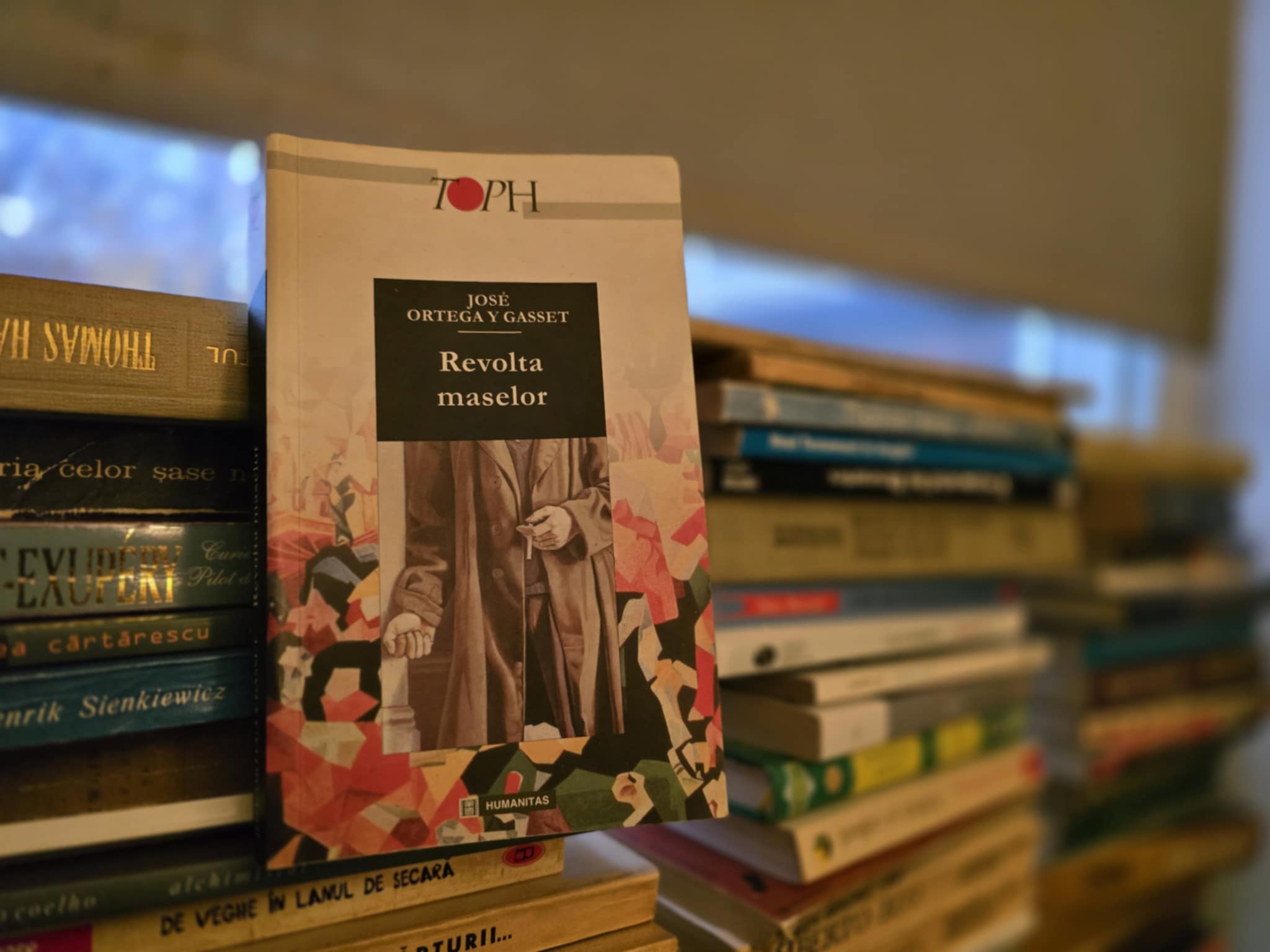
Introductory Thoughts
In this review, I am relying on several academics, namely Paul Bishop and Dylan Jaggard.
This book was originally part of a larger project (comprising four volumes) called Revaluation of All Values, which could have become the most important work of “little Jesus,” as he was called in his childhood. Unfortunately, he was unable to write the other volumes of the project, leaving only this one.
The plan was as follows: 1. The Antichrist. An attempt at a critique of Christianity. 2. The Free Spirit. A critique of philosophy as a nihilistic movement. 3. The Immoralist. Critique of the most disastrous form of ignorance, morality. 4. Dionysus. The philosophy of eternal recurrence.
Although one of the editions I own states that The Antichrist was published posthumously in 1901, this is not entirely true. It actually happened in 1895, but it was not published by Nietzsche himself, and his preferred subtitle was ignored (the subtitle being “Fluch auf das Christenthum”, meaning “Curse on Christianity”).
The Aim of the Book
The purpose of The Antichrist is to reevaluate values, especially to deliver the coup de grâce to Christianity, which Nietzsche considered the purveyor of nihilistic values for nearly two thousand years.
The Antichrist is essential for understanding Nietzsche’s critique of Christian morality, but it has been overshadowed by The Genealogy of Morals. While the latter offers a psychological explanation of the origins of Christianity, The Antichrist provides a necessary historical counterbalance, and Nietzsche intended the two to be read together.
Analysis of the Book
In The Antichrist, Nietzsche uses the psychological insights from The Genealogy of Morals and constructs his own history of Christianity. His exposition on the initial revaluation of values by the Jews focuses on the creation of the notion of the moral order of the world. The Jews created this moral world in order to denigrate the natural world in which they had once lived. They had to do this in order to survive as a people.
Nietzsche’s investigation into the origins of Christian ethical values shows that at the root of the revaluation of ancient values lies a deep desire for revenge. Christian values are suitable for those who suffer from the unpleasant conditions in which they find themselves. Nietzsche argues that, although many still need these values to understand their lives, there are also people who are prevented by these values from making the most of their existence. He believes that these people need a more life-affirming set of values.
Little Jesus
Nietzsche was born into a family with a long tradition of Protestant pastors, and as a child he was nicknamed “little pastor” or “little Jesus” for his ability to quote Bible passages and sing hymns. However, his autobiographical writings show early, decidedly non-religious tendencies and a struggle to free himself from his Christian upbringing. He criticized the timid cowardice associated with submission to God’s will and believed that Christian teachings promoted a false relationship with the earthly world by overemphasizing the supernatural.
His academic career marked a transition from theology to classical philology, his true passion, which profoundly influenced his criticism of Christianity. He accused the church and Christian scholars of poor or lazy philology, capricious interpretations of Scripture, and even deliberate falsifications of texts to support doctrines, such as adding passages to the Septuagint to invent messianic prophecies. For Nietzsche, this mismatch with philology was directly linked to an impulse to lie.
He also developed a psychological argument against Christianity: the Christian need for salvation stems from a false psychology and misinterpretations of human experiences. Once this psychological mechanism is understood, the entire faith collapses.
Between Jesus and Christianity
However, Nietzsche had an ambivalent attitude toward the historical role of Christianity: he recognized it as a “balm” for decaying ancient cultures and as a factor that helped preserve elements of Greek culture by domesticating the barbarians. But he lamented that it brought “the greatest misfortune of mankind” (p. 80), especially through the introduction of the paradox of “God on the cross” (p. 80), an image that reduced everything that was powerful to absurdity and opposed the wisdom of the world.
Crucially, Nietzsche makes a firm distinction between Jesus and Christianity: “in essence there was only one Christian, and he died on the cross” (p. 57). He interpreted Jesus’ death not as an act of redemption for sins, but as “the strongest proof, the proof of his teaching” (p. 60) about how to live without resistance or anger, in unity with God and not in guilt. The notions of guilt, punishment, and reward were, in Nietzsche’s opinion, absent from Jesus’ original psychology and teachings.
Christ and the Antichrist
The title is ambiguous, although the best interpretation points to an anti–Judeo-Christian doctrine. Nietzsche often identifies himself with the figure of the Antichrist, seeing himself as a conqueror over God and over nothingness, representing the great health and redemption of this reality. He introduces the figure of the “Hyperboreans” as an ideal audience or state of mind, those who have “discovered happiness” (p. 9) and are immune to modern Christian ideas, capable of thinking beyond conventional paths.
His critique is summarized in an anti-catechism, where he redefines good as anything that “enhances in man the feeling of power, the will to power, power itself” (p. 10), and evil as “whatever springs from weakness” (p. 10). He emphasizes method and philology as essential tools of understanding, in opposition to the theologian’s instinct, which he associates with dishonesty and the destruction of the rational achievements of the ancient world. Nietzsche believes that the priests’ assault led to the collapse of the Roman Empire, which he admired as the pinnacle of organization and culture.
Nietzsche intentionally separates the portrait of Jesus from the doctrines of the Church. He describes Jesus as a great symbolist and anti-realist who understood only inner subjective realities as truths, using everything else (nature, history, language) as signs or parables. He calls him an “idiot” (p. 45, alluding to Dostoevsky’s Prince Myshkin), in the sense of being incapable of saying “no” to external reality, living a reborn childhood of the spirit. Christ’s “good news” was a way of life based on happiness and love, free from withdrawal or exclusion, embodying universal equality as children of God. His proofs were not logical arguments or miracles but inner lights: inner feelings of joy and self-affirmation, pure evidence of strength.
Paul of Tarsus
For Nietzsche, the main culprit in the corruption of early Christianity is Paul of Tarsus. Paul is the opposite type of Jesus, a genius of hatred, “the greatest of all apostles of revenge” (p. 70), who falsified Christ’s life, teachings, and death. He shifted the center of gravity of all life beyond this existence, into the lie of a resurrected Jesus, transforming death on the cross and resurrection into a sacrifice of guilt.
This introduction of horrifying pagan elements (sacrificial death, judgment, personal immortality) was, for Nietzsche, a deliberate maneuver to establish priestly power and to tyrannize the masses. Paul is also accused of transforming the doctrine of personal immortality into the destructive political concept of equal rights for all, what Nietzsche calls Christian dynamite that led to nihilism by shifting the meaning of life into an afterlife or nothingness. He concludes: “The Christian and the anarchist – both decadents; both incapable of acting otherwise than dissolving, poisoning, undermining, bloodsucking” (p. 95).
In short, Nietzsche questions the unconditional value of truth, often considering it no more useful than untruth. Yet in The Antichrist he wields truth as a weapon against Christianity, since its values deny life. For him, the supreme criterion is life as will to power: values are “good” when they enhance strength, growth, and vitality, and “evil” when they arise from weakness and deny reality. Christianity, founded on guilt and denial, is condemned as life-negating, although Nietzsche admits that for weaker individuals such values may be necessary to make existence bearable. Ultimately, he insists that those capable of affirming life must abandon the life-denying Christian morality and adopt values that affirm existence.
YHWH, the Jewish God
Nietzsche further argues that Christianity’s roots lie fundamentally in Judaism, and that its origin stems from the invention of a moral order of the world, the belief that God governs the universe through moral laws of reward and punishment. Drawing on but radicalizing the biblical studies of Wellhausen, Nietzsche shows how the ancient Jews shifted from life-affirmation and natural vitality through a national, amoral God (YHWH as power and fertility) to the creation of a moral and universal God during the crises of exile.
This transformation, orchestrated by priests, rewrote history, redefined God as transcendent, and placed obedience to law above natural existence. For Nietzsche, this process marks the decisive revaluation of values: the invention of a world of guilt, judgment, and priestly power that paved the way for Christianity.
One True Christian, and He Died on the Cross
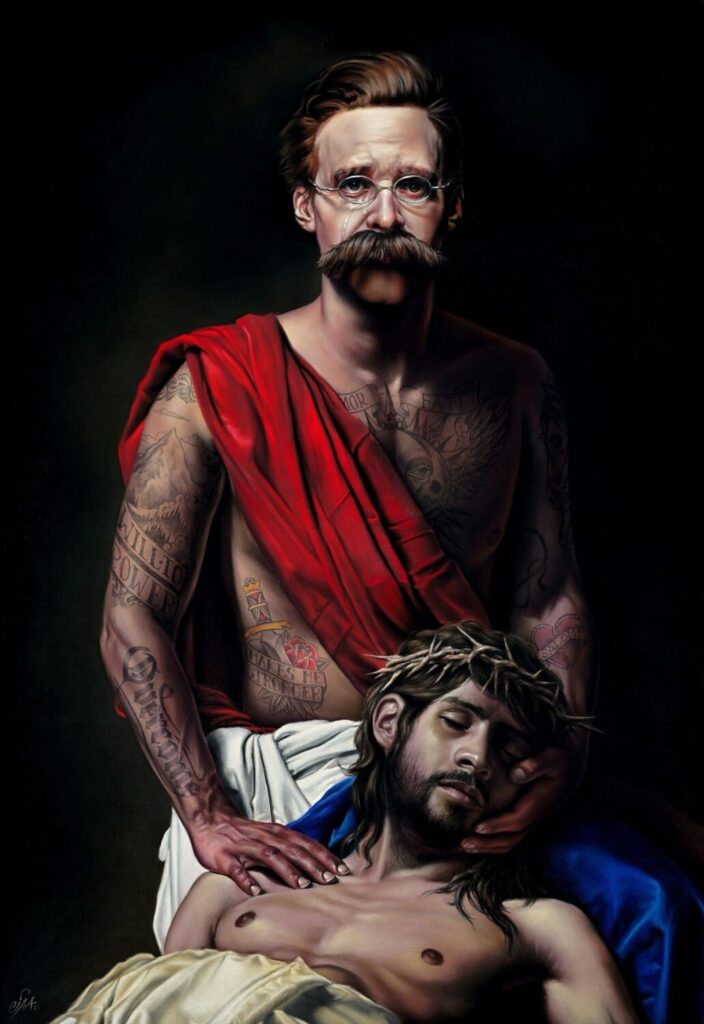
Nietzsche’s account of the historical Jesus differs radically from the Christianity that followed. He argues that Jesus himself was the only true Christian, preaching a life of inner peace, love, and the overcoming of resentment. For Jesus, the Kingdom of God was not a future paradise but an inner state of being. His way of life resembled Buddhism or Epicureanism more than developed Christianity. Yet his disciples misunderstood him, taking his symbolic language literally and turning his message of non-resistance into a movement driven by resentment and blame, especially against Jewish priests. This marked the beginning of Christianity as a distortion of Jesus’s example.
Christianity then evolved into a universal religion. Unlike Judaism, it sought to convert all humanity and softened the image of YHWH into a God of love, though retaining hidden traces of wrath and judgment, such as the idea of hell. Nietzsche sees Christian values like humility, compassion, and chastity as tools of the weak, giving meaning to their suffering but denying life and strength.
Christianity as ‘Platonism for the People
The spread of Christianity was decisively linked to Paul, who turned the death of Jesus into a theology of sin, salvation, and eternal punishment. The concept of hell gave Christianity immense psychological power, promising revenge against the strong and fear-based incentives for conversion. The first converts came from the lower classes, who found in Christianity consolation, community, and hope. Roman persecutions only strengthened their resolve.
The rise of Christianity among the Roman nobility became possible especially through Constantine’s conversion, motivated by political reasons. Christianity offered unity and submission: useful tools of governance. Moreover, philosophical traditions had prepared the ground: Platonism, with its ideas of the soul’s immortality and the devaluation of the senses, and certain aspects of Stoicism, with its emphasis on discipline and asceticism, made Christianity appear respectable and compatible with noble ideals. Nietzsche calls Christianity “Platonism for the people.”
Final Thoughts
In conclusion, Christianity triumphed because it combined psychological comfort for the weak, political utility for rulers, and philosophical respectability for the nobles. Nevertheless, in essence, Nietzsche considers it a life-denying distortion – both of Jesus’s original message and of the noble vitality of antiquity.
Nietzsche views modernity as a conflict between the life-affirming morality of the masters and the life-denying Christian morality of the slaves, leaving people morally confused and hypocritical. He criticizes Christian values, especially compassion and guilt, for weakening the individual and undermining life’s vitality. True ethical conduct, for Nietzsche, arises from a life lived fully, from actions consistent with one’s instincts, and from finding joy in personal growth, not through duty or self-sacrifice. He calls for a revaluation of values grounded in human nature and vitality, not in metaphysical or religious authority.