General presentation
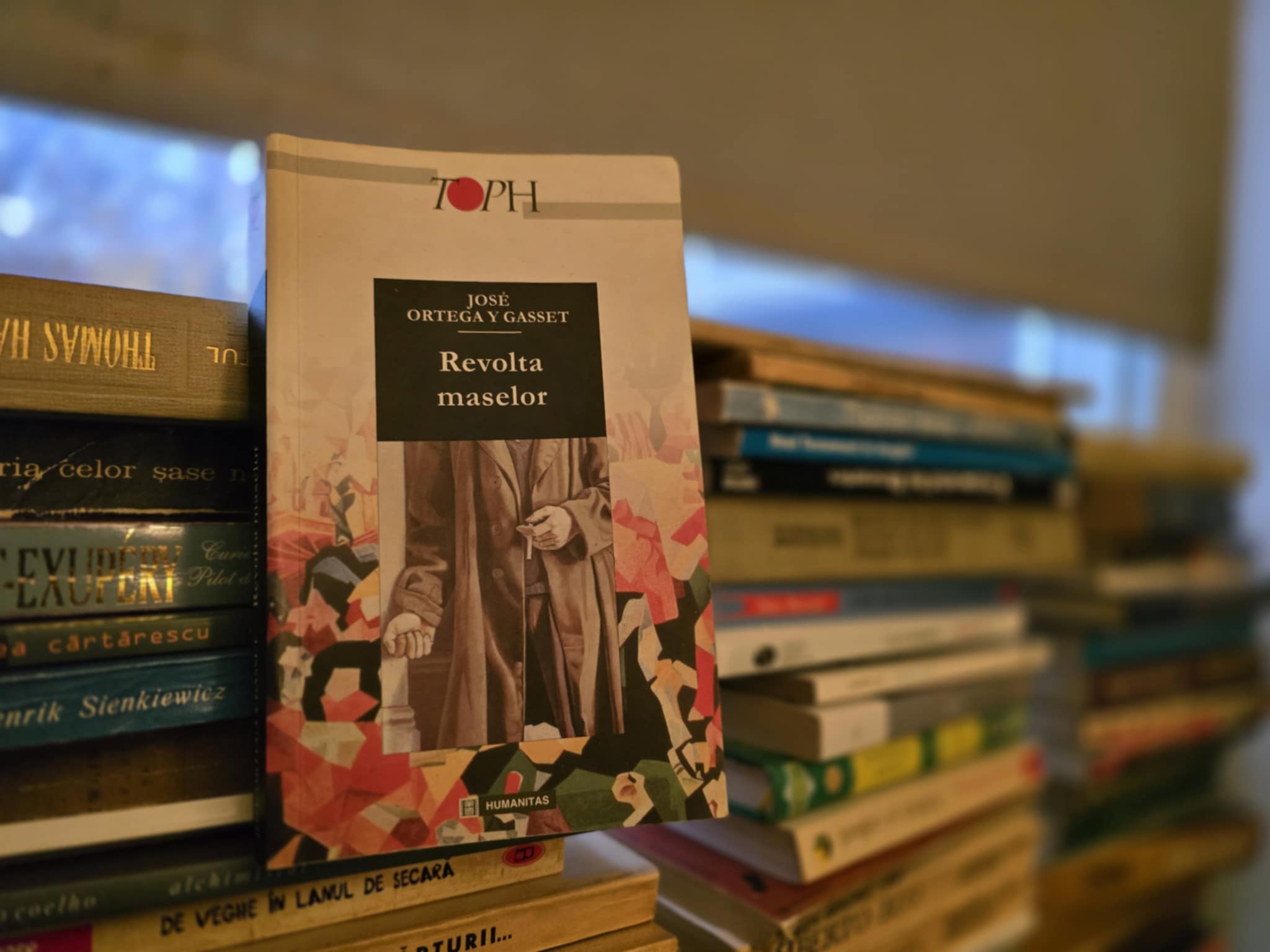
The book was published in 1930 by the Spanish philosopher Jose Ortega y Gasset as a philosophical essay. It was built upon subjects he had treated previously In his book España Invertebrada, published in 1922, in an article titles Masas in 1926 and in two lectures given to the Association of Friends of Art in Buenos Aires in 1928. His purpose with this book was to collect and complete what he had already said, in order to produce an organic doctrine concerning the most important fact of our time.
Ortega warns that language, far from being a transparent tool of thought, is an imperfect and often deceptive medium, capable of expressing only fragments of what we truly mean. He criticizes the impersonal way in which modern discourse addresses “humanity” as a whole, arguing instead that genuine communication must occur between individuals who truly listen and understand each other.
The Spanish author begins by examining the outward appearance of the modern man before delving deeper into his inner nature, situating his analysis in the context of Europe in 1926–1928, a period of apparent stability despite an ongoing crisis. The book’s focus is on the “average man,” who dominates society today, and Ortega isolates this figure to understand his impact on civilization and culture. He stresses the importance of historical perspective and continuity, warning against illusions like the idea of America as the ultimate future, and highlights that the mass-man lacks the depth and historical sense necessary for true cultural and civilizational progress
Ortega’s mass-man resembles Nietzsche’s “herd,” both representing the decline of individuality and moral strength, themes I’ve also explored in Beyond Good and Evil
A Brief Personal Overview of the Book

In The Revolt of the Masses, José Ortega y Gasset identifies the emergence of a new human type born in the 19th century: the so-called “mass-man.” This figure arises amid Europe’s explosive population growth between 1800 and 1914, a demographic transformation that fundamentally alters social dynamics. For Ortega, the mass-man represents a plebeian spirit, as Goethe described: a self-satisfied individual guided by pleasure and comfort, content with mediocrity and indifferent to the higher ideals that once shaped civilization. In contrast, the noble man aspires toward discipline, order, and an allegiance to values beyond himself, to something superior that demands effort and self-overcoming.
Ortega divides humanity into these two fundamental types: the average or mediocre man, and the noble or exceptional one. The average man, he argues, lives within the comforts of an age made easy by liberal democracy and modern technology. This comfort, however, breeds complacency. The mass-man enjoys the fruits of progress without understanding the intellectual labor and sacrifice that made such progress possible. He consumes civilization without contributing to it, mistaking inherited achievements for natural rights. In this way, he becomes detached from the cultural and moral continuity that sustains society.
By contrast, the noble man embodies the opposite impulse: a drive toward self-discipline and a cult of servitude, meaning devotion to ideals higher than personal satisfaction. Ortega emphasizes that what separates humans from animals is continuity: while each tiger must become a tiger anew, humans inherit and build upon the past through memory and tradition. Civilization, therefore, depends on the ongoing effort of exceptional individuals who preserve and renew culture. Ortega concludes that the masses, though capable of sustaining modern life, must entrust leadership to the cultivated minority, the intellectual and moral elite capable of guiding humanity’s progress responsibly..
The Coming of the Masses
“What previously was, in general, no problem, now begins to be an everyday one, namely, to find a room” (p 48).
This first chapter establishes the central thesis of the essay: the most important fact of the present moment in Europe is the accession of the masses to complete social power. The author terms this phenomenon “the revolt of the masses”, noting it signifies the greatest crisis afflicting civilization, impacting not only political life but also the moral, intellectual, economic, and religious spheres.
This phenomenon is visually evident in the universal fact of agglomeration, where towns, cafes, trains, and public gatherings are perpetually full and overflowing. The multitude, which historically existed scattered or unnoticed, has suddenly advanced to the forefront, occupying the principal character role on the social stage.
The social mass is not strictly a working class, but the assembly of individuals who are not specially qualified. The sheer quantity of the multitude transforms into a qualitative determination, meaning the mass represents the average man. The mass-man’s defining characteristic is the triumph of the commonplace mind, one who, feeling just like everybody, believes he is ill-gifted and mediocre, yet demands nothing special of himself while proclaiming the rights of the commonplace. This process results in the masses supplanting the minorities and asserting a dominant political and social domination.
The Rise of the Historic Level
“We are living in a levelling period; there is a levelling of fortunes, of culture among the various social classes, of the sexes” (p 64).
The accession of the masses is a formidable fact, entirely new to modern civilization. To find a parallel, one must look to ancient history, specifically the decline of the Roman Empire, which saw an “uprising of the Empire of the Masses” (p 56) that absorbed the directing minorities. The phenomenon is understood through two key characteristics:
1. The masses now exercise social functions and enjoy pleasures and use instruments previously reserved for the select groups, demonstrating that modern life has provided the mass-man with a vital repertory formerly held only by minorities. This implies that the level of history has suddenly risen to a point previously reached only by aristocracies.
2. “The masses are indocile to the minorities” (p 59); they refuse to follow or respect the superior groups, pushing them aside and supplanting them.
The sovereignty of the unqualified individual has transitioned from being a mere juridical idea to a psychological state inherent in the average man. The mass-man believes he is now master and ruler of himself and his existence. This unprecedented uprising of the vital level represents a fabulous increase in possibilities stemming from two centuries of education and economic improvement, resulting in a leveling period across various spheres, including fortune and culture.
The Height of the Times
“The man of today feels that his life is more a life than any past one, or, to put it the other way about, the entirety of past time seems small to actual humanity” (p 73).
This chapter addresses the consciousness of the modern age and how the current generation relates to history. There is a profound difference in the psychological state of today’s man compared to men of most historical periods: the average man no longer looks upon past epochs as superior to his own. Instead, the modern man is characterized by a “strange phenomenon of the vital altitude” (p 66): a deep-seated impression that his life is better, fuller, and superior to that of any previous era.
The current period is thus defined by a plenitude of the time, meaning the long-held desires and aspirations of preceding centuries have finally been realized, and the goal toward which earlier generations strove has been attained (“at last”). The consequence of this arrival at the historic summit is a dominant feeling of self-satisfaction and self-possession.
However, this feeling of fullness and strength is coupled with a strange insecurity. While the modern man believes his present life is superior to all past times, there is a secret joy in knowing what is not going to happen tomorrow, mixed with a melancholy arising from the fact that modern culture no longer sees itself as definitively assured. This paradox results in the modern temperament being proud of its strength and at the same time fearing it, marking the current time as unique in recorded history.
The Increase of Life
“There is only one absolute decadance; it consists in a lowering of vitality” (p 81)
The rule of the masses and the rising historical level are symptoms of a greater, almost grotesque, and incredible fact: the world has suddenly grown larger and human life has become world-wide in character. The average man now lives the existence of the entire planet, with effects felt simultaneously across the globe due to an increased everywhereness.
The profound meaning of this chapter’s title lies in the immense increase of vital possibilities, the sheer quantity of things which the contemporary individual can desire and enjoy. The stock of purchasable goods and available pleasures has become practically limitless for the middle classes. In the intellectual realm, this is demonstrated by an enormous proliferation of paths of ideation, sciences, and points of view. This surge reflects a constant, extensive increase in scientific precision and subjective potency.
The defining attribute of the mass-man is this quantitative advance: an increase in potency rather than the actual quality of existence. The man of today, feeling that his life is fuller and believing himself to be master of himself, operates with a consciousness of a potentiality far greater than any in the past. However, this very feeling that everything is possible carries the inherent risk of leading to retrogression, barbarism, or decadence.
A Statistical Fact
“To live is to feel ourselves fatally obliged to exercise our liberty, to decide what we are going to be in this world” (p 85).
We can all be sure of the dramatic demographic expansion of Europe as the concrete, quantifiable origin of the mass phenomenon described in earlier chapters.
The principal fact highlighted is the historical jump in European population, which rose from 180 million in 1800 to 460 million by 1914. This unprecedented increase produced a gigantic mass of humanity that has effectively inundated the historic European area. The significance is tied not merely to the quantity but to the dizzy rapidity of the increase, which means successive heaps of human beings have been quickly added to the historic scene.
This acceleration results in the average type of European possessing a soul that is healthier and stronger than those of the last century, but simultaneously much more simple. The mass-man is seen as a kind of primitive man suddenly rising in the midst of an old civilization. They have been given modern technical tools and scientific accomplishments but lack the corresponding moral and spiritual discipline to sustain them.
The overwhelming force of this mass ascent stems directly from the fact that liberal democracy and technical knowledge (the greatest developments of the 19th Century) have caused the human species in Europe to be physically and intellectually triplicated. However, this abundance of potential is paradoxically leading to a real decadence, converting potential abundance into practical scarcity and pitiful impotence. The revolt of the masses is thus seen as synonymous with what one contemporary thinker termed the “vertical invasion of the barbarians” (p 90).
The Dissection of the Mass-Man Begins
“The common man, finding himself in a world so excellent, technically and socially, believes that it has been produced by nature, and never thinksof the personal efforts of highly-endowed individuals which the creation of this new world presupposed” (p 95).
The mass-man, who is attempting to take the lead in European existence, is a direct product of the 19th Century. The economic and physical horizon for the middle and working classes expanded dramatically, providing a new luxury, greater security, and independence daily. This world runs smoothly on its physical and political rails, offering a life virtually free from the likelihood of violent disruption or danger.
This ease of existence, installed by the technical and liberal achievements of the preceding century, leads to the mass-man’s two defining psychological traits: a free expansion of his vital desires and a subsequent radical ingratitude toward the civilization that makes his existence possible. He is likened to a spoiled child who believes he has no obligations and that nothing is impossible, viewing himself as superior to everybody.
Ortega y Gasset tells us that there are three principles that made this new world possible: liberal democracy, scientific experiment and industrialism. All of them come from previous centuries, but the merit of the 19th century resides in their application.
The mass-man enjoys the benefits of modern civilization as if they were natural rights, without understanding or valuing the effort and foresight that created them. This attitude marks a rebellion against order, leaving him with powerful tools but without the moral or spiritual discipline to preserve the very civilization that sustains him.
Noble Life and Common Life, or Effort and Inertia
“To live as one likes is plebeian; the noble man aspires to order and law (Goethe)” (p 101).
We are now confronting with the psychological distinction between the mass-man and the select minority.
The mass-man, having attained an elevated level of existence thanks to civilization, believes he is the lord of his own existence and accepts no external authority, making no demanding standards upon himself.
In opposition, the select man is characterized by an internal compulsion to pursue a standard superior to himself, freely accepting constraints to live a life of excellence and strenuous effort. Nobility is defined by obligations, not rights, following the principle of “Noblesse oblige” (p 101). The masses, by contrast, live a common or inert life, incapable of spontaneous, joyous effort, and are marked by a fundamental “root-ignorance of the very principles of that civilisation” which supports them. This resulting indocility means the mass-man is deaf to direction and is incapable of submitting to the superior minorities.
The elite man and the common one are also distinct in that “the former is the one who makes great demands on himself, and the latter the one who makes no demands on himself, but contents himself with what he is, and is delighted with himself” (p 101).
Why the Masses Intervine in Everything, and Why Their Intervention Is Solely by Violence
“This is what in my first chapter I laid down as the characteristic of our time; not that the vulgar believes itself super-excellent and not vulgar, but that the vulgar proclaims and imposes the rights of vulgarity, or vulgarity as a right” (p 109).
What drives the mass-man’s behavior in public life?
The mass-man believes he is intellectually complete and perfect, finding security within his own “mental furniture” (p 107). This self-confidence, likened to Adam’s original paradisiacal plenitude, makes the mediocre soul fundamentally incapable of self-improvement because it refuses the necessary condition of progress: comparing oneself to others. As Goethe mentioned in The Sorrows of young Werther: “What madness, judging someone after yourself!”
The modern problem, Ortega argues, is not the ignorance of the masses but their arrogance, more precisely, the intellectually vulgar now see themselves as superior and elevate mediocrity into a moral right. The mass-man relies on unexamined opinions rather than true ideas and rejects all external standards or authority. This rejection leads him to replace reasoned discourse with direct action, where force becomes the primary means of resolving issues. Such behavior signifies a regression into barbarism, defined by the absence of shared principles or respect for civilized order.
The Primitive and the Technical
“The actual mass-man is, in fact, a primitive who has slipped through the wings on to the age-old stage of civilization” (p 122).
The revolt of the masses presents an ambiguous situation, simultaneously a sign of triumph and potential disaster for humanity. The key diagnosis is that the contemporary mass-man is a “primitive one, a Naturmensch rising up in the midst of a civilised world” (p 121).
While modern civilization has provided this average man with immense technological benefits, he accepts these marvels, such as the motor-car and the use of the apparatus, as natural rights. He remains fundamentally indifferent to the principles of civilization that make his existence secure and prosperous. This psychological state, where the individual is unaware of the complexity of the edifice that supports him, is viewed as a form of barbarism.
The danger lies in the staggering paradox: society is being directed by a type of person whose vital level is higher than any in the past, yet he possesses a soul that is simple and fundamentally lacks interest in the very principles of culture. This lack of moral responsibility and discipline converts potential abundance into pitiful impotence.
Primitivism and History
“It would be stupid to laugh at the romantic. The romantic is also in the right.Under these innocently perverse images there lies an immense, ever-present problem: that of the relations between civilisation and what lies behind it – Nature, between the rational and the cosmic” (p 129).
This chapter distinguishes between Nature, which is self-supporting, and Civilisation, which is artificial and requires the constant, active effort of individuals to sustain it. The mass-man, however, incorrectly treats the conveniences and securities of modern civilization as if they were spontaneous and self-producing like Nature. If this care and concern for upholding civilization are neglected, the civilized world will vanish, leaving the individual surrounded by the primitive forest.
The mass-man’s failure stems from his inability to keep pace with the increasing complexity of his own culture. This leads to incredible ignorance of history among the most cultured people today.
The Self-Satisfied Age
“He finds himself surrounded by marvellous instruments, healing medicines, watchful governments, comfortable privileges” (p 142).
The mass-man’s psychological structure is defined by three factors:
1. An inborn impression that life is easy, plentiful, and free from grave limitations, resulting in a feeling of triumph and power.
2. A belief that his moral and intellectual endowment is excellent and complete, leading him to impose his own vulgar views.
3. A tendency to intervene everywhere according to a system of direct action.
The mass-man is characterized as a spoiled child and a barbarian, acting as the heir to civilization and receiving its conveniences (like security) as an inheritance, yet lacking gratitude. This belief that everything is possible creates a superlative abnormality. He harbors the illusion that he is master of his destiny and can act without external consequence, failing to realize the fragility of the civilization that supports him.
The Barbarism of “Specialization”
“There can be no doubt that it is technicism, in combination with liberal democracy, which has engendered mass-men in the quantitative sense of the expression” (p 150).
Modern experimental science, while responsible for civilizational progress, demands extreme specialization which converts its practitioners into a type of modern barbarian.
The defining trait of this specialist is that he is conscientiously ignorant of everything outside his narrow professional field. He knows only his small corner of the universe extremely well and is radically ignorant of all the rest. This results in a generation that is “more ‘scientists’ than ever, but much less ‘cultured'”.
This intellectual imbalance poses a severe danger because this highly qualified individual adopts the attitude of the unqualified mass-man in all other spheres of life, such as politics and art. He believes civilization is spontaneously there, failing to grasp the fragile historical and philosophical conditions required to sustain it. This unbalanced specialization threatens to strangle science and culture itself.
The Greatest Danger, the State
“Theship of state is a metaphor re-invented by the bourgeoisie, which felt itself oceanic, omnipotent, pregnant with storms” (p 159-160).
This chapter focuses on the gravest threat to European civilization stemming from the masses’ ascension: the State itself, as an omnipotent and omnipresent power.
The modern State is a “formidable machine” (p 162) of wonderful efficiency, brought about by early capitalism and industrial organization. The mass-man, or the contemporary State, is easy to manage because he sees the State as anonymous and immense, capable of solving all problems. When difficulties arise, the mass-man demands that the State intervene immediately, securing solutions through its immense and unassailable resources.
This State intervention represents the absorption of all spontaneous social effort by the public authority. The mass-man adopts the attitude that simply touching a button will solve complex problems, giving him the illusion that he can obtain everything (security, well-being) “without effort, struggle, doubt, or risk” (p 162-163).
If spontaneous social action is broken up repeatedly by State intervention, society will be left “bloodless, a skeleton, dead with that rusty death of machinery” (p 163). The rise of the powerful State, which is the producer of security, is paradoxical because this very security permits the mass-man to become indifferent to the civilization that supports him. Ultimately, the State overbears society with its anti-vital supremacy, enslaving it to live only in the service of the State.
Who Rules In The World?
“Rule is the normal exercise of authority, and is always based on public opinion” (p 171).
The masses’ rebellion shows both a favorable increase in human life and the fearful, radical demoralisation of humanity.
Legitimate rule is the normal exercise of authority, resting primarily on public opinion, not on sheer force. Historically, rule signifies the predominance of a spirit, as confirmed by the precision of history.
The current situation is that Europe has ceased to rule the world, suffering from a profound demoralisation. The youth of the world today, having been given over ruling, is left without a formal occupation, purpose, or continuity. Although Europe’s capabilities have increased, leading to an expansion of resources, this presumption of decadence still afflicts the continent. The great unanswered question is who will succeed Europe in ruling, or if the historic world is returning to chaos because authority is going unexercised.
The Real Question
“The mass-man is simply without morality, which is always, in essence, a sentiment of submission to something, a consciousness of service and obligation” (p 236).
Europe has been left without a moral code. The mass-man believes life is easy and avoids conforming to any moral guidance, acting like a spoiled child who claims all rights but recognizes no obligations.
The actual crisis is a conflict between two moralities, “one in decay, the other at its dawn”(p 236). The mass-man is essentially without morality, simply repudiating existing standards without replacing them. Europe, therefore, risks falling into a magnificent but rootless culture. This lack of moral code, paired with an overwhelming sense of unlimited rights, creates a superlative abnormality in the man of today.
Final Thoughts and Remarks
After this lecture it seems like we are thrown back into the realm of Nietzsche. The German philosopher, although considering himself an imoralist, did use in his writings the term morality, even describing two types: slave and master. The resemblence it`s there, at least on the surface. Ortega y Gasset is describing a class with morality, the aristocrats, and the mass-man, the class without morality. It is not necessarily the same, but the division is there. And the disposition of favouring one to the other is also present in both of the philosophers. So, is Ortega an elitist through discrimination?
If the mass-man poses a danger to European culture, eroding it from inside, who is the so-called elite that should rise and take charge? Scientists, writers, painters, “the philosopher-king”? All?
Can any of the readers, when going through this book, arrive at the realisation that they might be a mass-man?