What is Heart of Darkness?
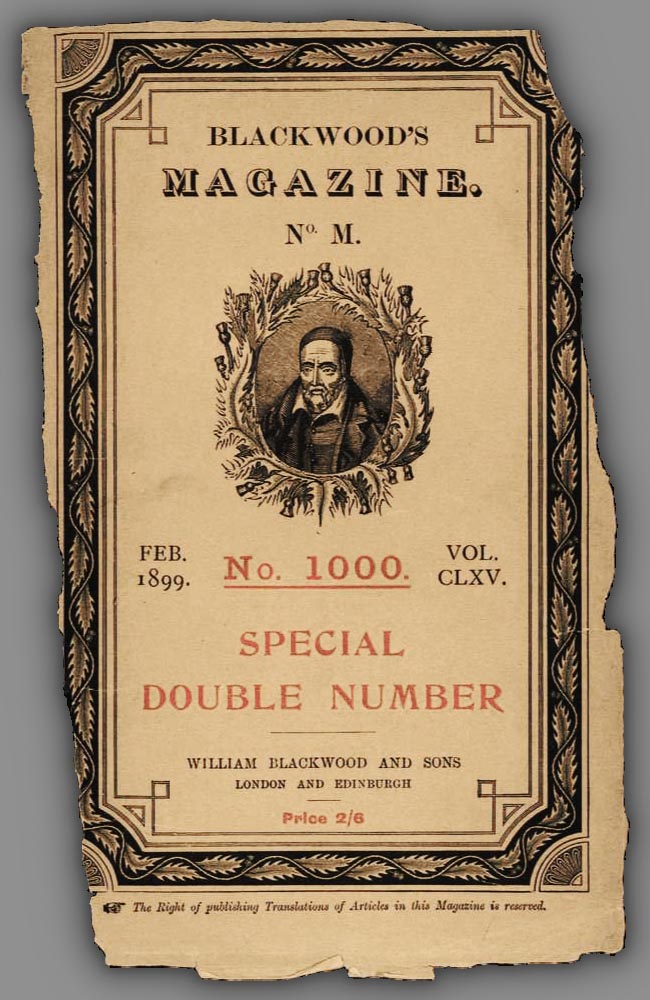
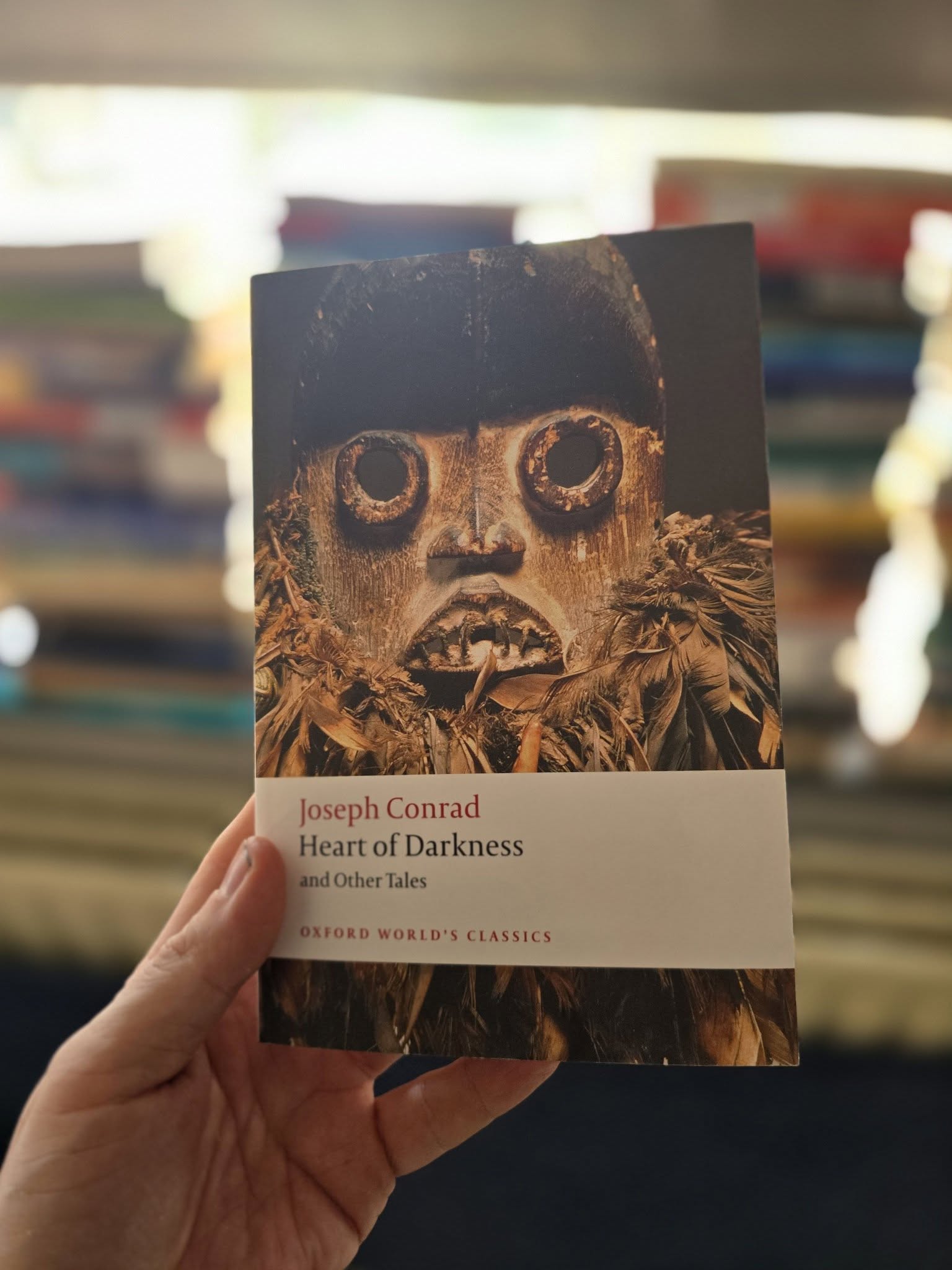
Heart of Darkness by Joseph Conrad is a psychological and philosophical novella published in 1899. It explores imperialism, morality, and human nature through a journey into colonial Africa.
The title of the book is a bit ambiguous. It can suggest the centre of a dark place, but dark with the meaning of obscure, mysterious, sinister or evil. It thus speaks about Africa, The Dark Continent.
But at the same time it can also speak about a person with a dark heart, which anticipates the depiction of Kurtz.
The term darkness also connotes the death of the individual or of the human race, but even the dark ages between periods of civilization; the abominable, the primordial, the unknown.
In contrast, light is associated with civilization and truth, but also with the brightness and destructivness of fire.
The Story
Set aboard the Nellie on the Thames, Charlie Marlow recounts his journey as a steamboat captain for a Belgian trading company. Motivated by a childhood fascination with blank spaces on maps, Marlow travels to Africa to find the legendary Mr. Kurtz, an ivory agent whose reputation for brilliance and unbounded power has fascinated the Company:
At the time there were many blank spaces on the earth, and when I saw one that looked particularly inviting on a map (but they all look that) I would put my finger on it and say, When I grow up I will go there (p 108).
As Marlow navigates the treacherous river toward the Inner Station, he witnesses the brutality and inefficiency of the colonial mission. He notes that the conquest of the earth is often mere “robbery with violence,” (p 107) redeemed only by a selfless idea that Europeans use to justify their presence.
Deep in the wilderness, the monstrous and free environment strips away the veneer of civilization, leaving men to rely solely on their innate strength.
At the Inner Station, Marlow finds the station house surrounded by human heads on stakes, grim symbols of Kurtz’s lack of restraint. Kurtz has abandoned his idealistic civilizing goals (originally captured in a report that concluded with the scrawled postscript Exterminate all the brutes!) to become a literal deity to the local tribes. Now an “animated image of death,” (p 166) a physically wasted Kurtz is brought onto the steamer to return home.
During the journey back, Kurtz’s health fails. In his final moments, he experiences a complete knowledge of his soul’s adventures, whispering his famous last words: “The horror! The horror!”. Marlow views this as a moral victory, a candid judgment on the barren darkness Kurtz embraced.
Returning to the sepulchral city in Europe, Marlow finds he cannot share the truth with the commonplace public. When he visits Kurtz’s Intended, he chooses to protect her saving illusion of Kurtz’s nobility by lying that Kurtz’s final word was her name.
The narrative concludes on the Thames, which seems to lead into the “heart of an immense darkness” (p 187).
The Conquest of the Earth is a Selfless Idea Behind It
In the book, Marlow uses this phrase to distinguish between conquerors and colonists. He argues that while the act of taking over the earth is inherently not a pretty thing, it is redeemed in the minds of the colonizers by a higher, justifying purpose.
Marlow describes the conquest of the earth as essentially taking land away from people who look different, which he admits is often just robbery with violence and murder on a great scale. To him, the only thing that makes this acceptable is a justifying idea at the back of the action: a belief that there is a noble goal beyond mere theft.
This idea is not meant to be a sentimental pretence but a genuine, unselfish belief in a mission. He describes it as something quasi-religious that a person can “set up, and bow down before, and offer a sacrifice to” (p 107).
Marlow brings this up while reflecting on the ancient Romans in Britain. He considers the Romans conquerors who used brute force because they lacked this redeeming modern idea; they simply “grabbed what they could get for the sake of what was to be got” (p 107).
The “idea” serves as a moral veneer. Marlow notes that while the noble and lofty expression of such ideas can tingle with enthusiasm, the reality often collapses into the barren darkness of greed, as seen when Kurtz’s idealistic report ends with the scrawled postscript: Exterminate all the brutes!
Exterminate All the Brutes
Marlow finds the phrase Exterminate all the brutes! as a handwritten postscript at the end of a seventeen-page report written by Kurtz.
The phrase is scrawled at the foot of the last page of a report Kurtz wrote for the International Society for the Suppression of Savage Customs. While the rest of the document is eloquent, this specific note appears to have been added much later, serving as a terrifying contrast to the high-minded sentiments of the main text.
In the context of the story, the phrase represents the total collapse of European idealistic civilization when faced with the “heart of darkness”:
- Marlow describes the scrawled note as the exposition of a method for dealing with the native population. While the report starts with the idea that whites should appear as supernatural beings or deities to exert a power for good practically unbounded, the reality of Kurtz’s experience led him to a conclusion of total destruction instead.
- The phrase exposes the sentimental pretence of the colonial mission. It shows that the noble and lofty expression used to justify the conquest of the earth often masks a barren darkness of heart and ruthless power.
- The shift from altruistic sentiment to a call for extermination illustrates that Kurtz had kicked himself loose of the earth and lost all moral restraint. The wilderness found him out and whispered things to him that he did not know, ultimately leading to his incredible degradation.
- Marlow describes the phrase as blazing out like “a flash of lightning in a serene sky,” suggesting it is a sudden, shocking revelation of the brutal truth behind Kurtz’s seemingly noble civilizing goals.
Later, when Marlow gives the report to a journalist for publication, he tears off the postscript, effectively hiding the horror of Kurtz’s final method from the public to protect the man’s reputation and the saving illusions of society.
The Horror! The Horror!
Marlow interprets these words in different ways, suggesting the following meanings:
- Kurtz condemns as horrible his corrupt actions, so that this judgment upon the adventures of his soul on this earth is an affirmation, a moral victory.
- Or maybe Kurtz deems hateful but also desirable the temptations to which he has succumbed: the whisper has the strange mixing of desire and hate.
- Another interpretation is that Kurtz deems horrible the inner nature of everybody.
- Kurtz deems horrible the whole universe.
The words The Horror! The Horror! thus serve as a thematic nexus, a climactic but highly ambiguous utterance which sums up several of the paradoxical themes of the tale.
Joseph Conrad may have recalled here Psalms 55: 4-5: “My heart is sore pained within me: and the terrors of death are fallen upon me. Fearfulness and trembling are come upon me, and horror hath overwhelmed me.”
Final Thoughts
What can anyone say is the moral of the book? I do not think it has a simple, clear moral lesson, but there are a few things that can be told here.
A central theme is that civilization is a thin veneer that can easily vanish when the external constraints of society, such as policemen, butchers, and public opinion, are removed. Marlow suggests that when a man is left in utter solitude and utter silence, he must fall back on his own innate strength and capacity for faithfulness. Kurtz’s downfall occurs because he is hollow at the core; he lacks this internal restraint, allowing the fascinating and monstrous whispers of the wilderness to lead him into unspeakable rites and abominable satisfactions.
The book also serves as a grim critique of imperialism. Marlow notes that while the conquest of the earth is often just robbery with violence and aggravated murder on a great scale, Europeans justify it through a redeeming idea of progress and civilization. However, the reality of this idea is personified by Kurtz, who begins with a report on the august Benevolence of the white man but ends with the scrawled command to “Exterminate all the brutes!”. This suggests that the pursuit of such ideas without true moral restraint leads only to the barren darkness of the heart.
The necessity of saving illusions is too a notion we can learn here. The story suggests that the truth of this heart of darkness is too much for the commonplace world to bear. Marlow’s decision to lie to Kurtz’s fiancee, telling her that Kurtz’s last word was her name rather than “The horror!”, reflects his belief that society requires great and saving illusions to function. He feels that telling her the truth would have been “too dark altogether” (p 186).
The book inspired the very popular and classical Francis Ford Coppola movie, Apocalypse Now! from 1979 and a four-part HBO documentary miniseries directed by Raoul Peck from 2021 called Exterminate All the Brutes. I would strongly recommend both!